 Service clients
 Livechat
 Whatsapp
 Téléphone
 RDV
RDV E-mail
How to choose an engagement ring?
Understanding the importance of an engagement ring
More than a piece of jewelry, a symbol of commitment
Choosing an engagement ring is a defining moment in any couple’s life. More than an elegant piece of jewelry, it is a powerful symbol of commitment and everlasting love. During a proposal, the engagement ring becomes the tangible expression of a promise—one of devotion, partnership, and a shared future. Every element of the ring, whether it is the band in white, yellow, or rose gold, or the gemstone it features, carries its own meaning. Diamonds, for instance, are prized for their strength and brilliance, symbolizing the purity and durability of love.
An engagement ring is a piece that accompanies the wearer throughout her life. It is often seen as an extension of her personality and style. This is why choosing a ring that reflects your partner’s taste and preferences is essential. Whether you opt for a timeless solitaire or a more intricate design, every detail contributes to making this moment truly unforgettable.
The historical significance of engagement rings
The tradition of engagement rings dates back several centuries. One of the earliest recorded examples comes from 1477, when Archduke Maximilian of Austria offered a diamond ring to Mary of Burgundy. This gesture marked the beginning of a tradition that continues to this day. Over time, engagement rings have evolved in style and materials, yet their symbolism has remained unchanged: a promise of marriage and eternal union.
Historically, engagement rings have been crafted from a variety of precious metals and adorned with different gemstones. White and yellow gold remain among the most popular choices, while rose gold has gained popularity for its romantic and modern appeal. Diamonds are favored for their brilliance and durability, but other gemstones such as sapphires, rubies, and emeralds are also cherished for their distinctive character.
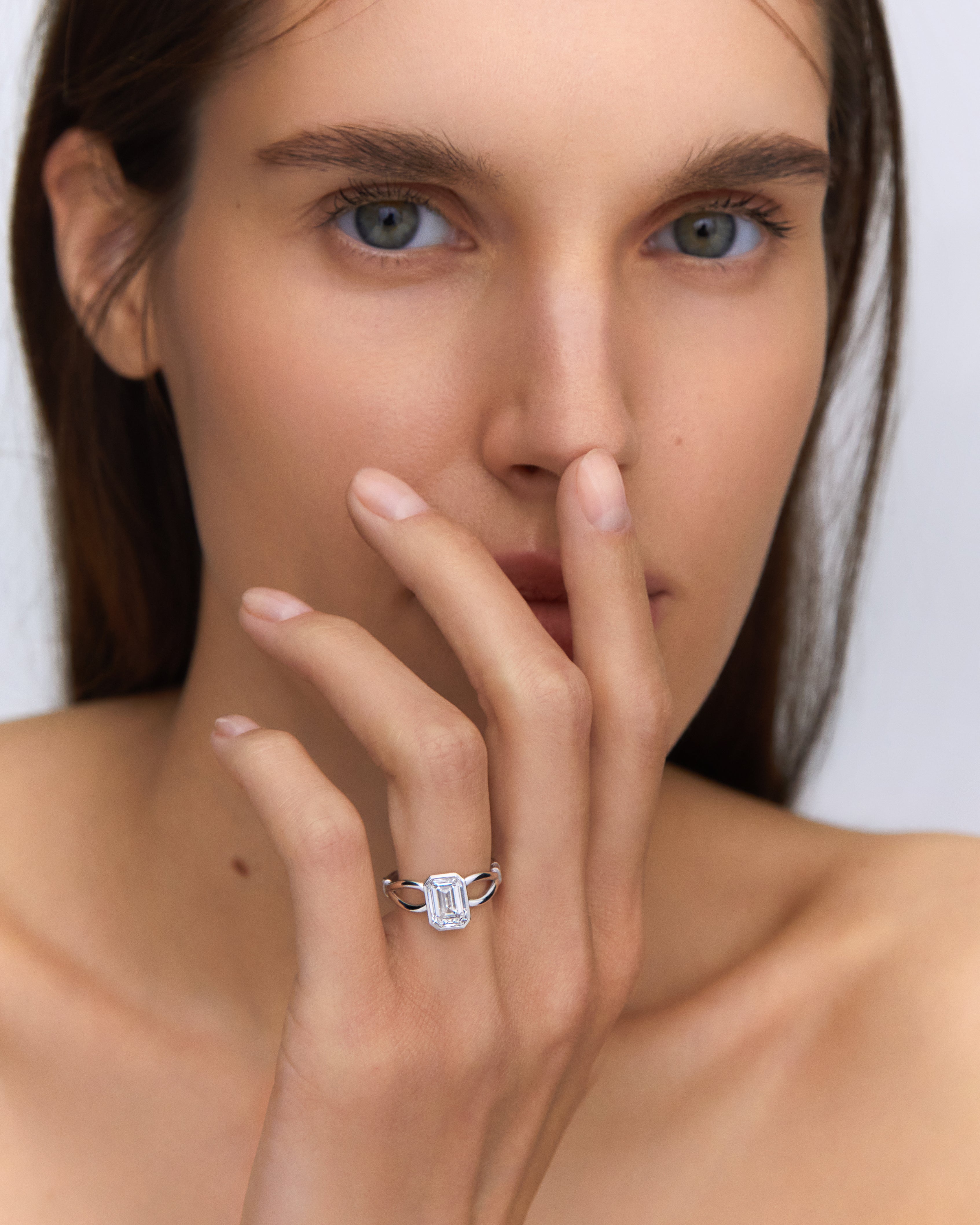
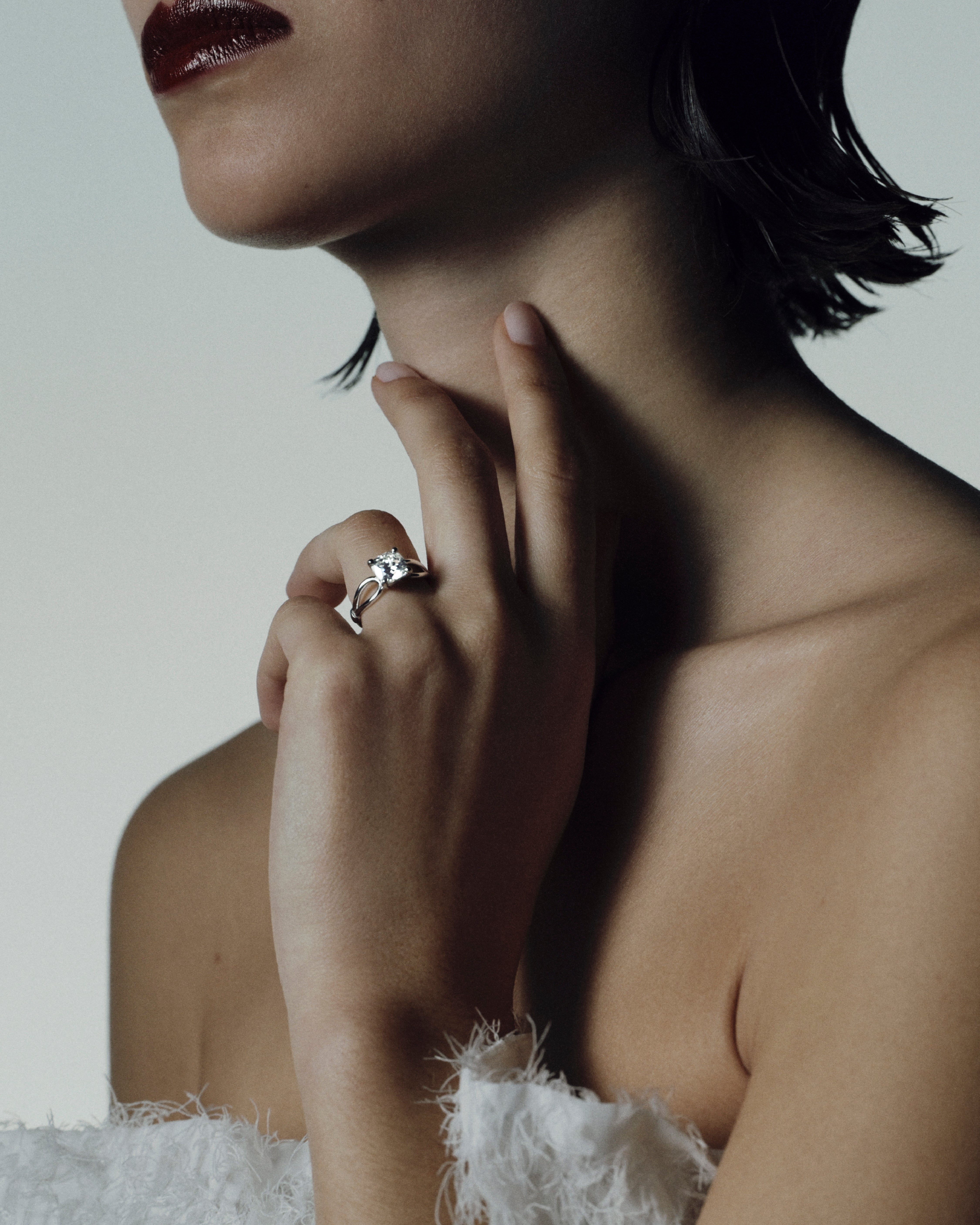
Place Vendôme in Paris stands as an iconic center of fine jewelry, where many couples come to choose their engagement ring. Each piece is a work of art, designed to capture the emotions and aspirations of those who wear it. Mazarin collections are created just steps away from this historic square, within the Maison’s workshops. From initial sketches to prototypes, each stage leads to the crafting of the gold—casting, sculpting, polishing, and finishing—before the final setting, carefully chosen for each creation: a sculpted setting to cradle the diamond within gold, a claw setting to enhance the brilliance of a solitaire, or a pavé setting to illuminate the surface with light.
Setting a realistic budget
How to set a budget for an engagement ring
Here are a few tips to help you set a realistic budget that respects your financial situation while allowing you to choose a beautiful engagement ring for your proposal.
Assess your personal finances: The first step is to evaluate your current financial situation. Review your income, savings, and monthly expenses. Make sure the amount you allocate to the engagement ring does not compromise your financial stability or future plans, such as your wedding or buying a home. Some people use a percentage of their annual income as a guideline. Traditionally, spending two to three months’ salary was recommended, but this rule is now considered outdated and should be adapted to your own priorities.
Consider your partner’s priorities: Take into account your partner’s preferences. Some may prioritize a larger diamond, while others may value higher quality or a specific design. If possible, discreetly gather insights from your partner or their close circle to understand what matters most. This will help you define where to focus your budget, whether on size, quality, or style.
Understand the key criteria: Familiarize yourself with the factors that influence the price of an engagement ring, particularly the 4Cs—carat, clarity, color, and cut. For example, a slightly smaller diamond with better clarity and color may offer greater overall value than a larger stone of lower quality.
Explore metal options: The choice of metal also impacts the budget. White gold, yellow gold, rose gold, and platinum each come with different price points. Platinum is typically more expensive due to its rarity and durability, while yellow gold often offers a more traditional and accessible alternative.
Compare prices and options: Take the time to visit different jewelers and compare prices. Explore both reputable boutiques and online stores to gain a clear understanding of available options. Reading reviews and expert guides can also help refine your decision. While Place Vendôme in Paris is renowned for high-end jewelry, many other jewelers offer beautiful pieces across a wide range of budgets.
Consider additional costs: Remember to include potential extra costs such as customization, engraving, or warranties. These details can enhance your ring but may also impact your overall budget.
Set a price range: Rather than fixing a strict budget, define a price range. This approach gives you flexibility and allows you to find the perfect ring without unnecessary constraints. A typical range might be between €1,000 and €5,000, though this will depend on your financial situation and your partner’s preferences.
By following these steps, you will be able to define a realistic budget for an engagement ring that symbolizes your commitment. Ultimately, the most important thing is to choose a ring that reflects your love while remaining aligned with your financial priorities.
Selecting the perfect gemstone
Diamonds: understanding the 4Cs
When choosing a diamond for an engagement ring, it is essential to understand the 4Cs: carat (weight), clarity, color, and cut. These criteria determine not only the quality but also the value of the diamond. Below is a detailed guide to help you navigate these key aspects and select the perfect stone.
Carat (Weight) : carat is the unit used to measure a diamond’s weight, with one carat equal to 200 milligrams. While carat does not directly define size, a higher carat weight generally results in a larger stone. Carat weight has a direct impact on price, with heavier diamonds being rarer and more valuable. However, a diamond’s apparent size also depends on its cut. Finding the right balance between carat weight and the other 4Cs can help maximize both brilliance and value within your budget.
Clarity : clarity refers to the presence of internal inclusions or external blemishes. The fewer imperfections a diamond has, the higher its clarity and value. The Gemological Institute of America (GIA) grades clarity on a scale from Flawless (no visible imperfections under 10x magnification) to Included (imperfections visible to the naked eye).
FL (Flawless): No internal or external flaws under 10x magnification
IF (Internally Flawless): No internal flaws, only minor surface imperfections
VVS1 and VVS2: Inclusions are extremely difficult to detect
VS1 and VS2: Inclusions are visible under magnification but not to the naked eye
SI1 and SI2: Inclusions may be visible under magnification and sometimes to the naked eye
I1, I2, I3: Inclusions visible to the naked eye
In practice, small inclusions are often invisible without magnification and do not affect a diamond’s beauty. Choosing a VS or SI grade can offer excellent value while maintaining a visually flawless appearance.
Color : diamond color is graded from D (colorless) to Z (noticeably tinted).
D to F: Colorless, extremely rare and highly valuable
G to J: Near colorless, slight tint only visible to a trained eye
K to M: Faint color, more noticeable in larger stones
N to Z: Visible color to the naked eye
Diamonds in the G–J range are often considered the best balance between beauty and value, as their slight tint is usually imperceptible once set in a ring.
Cut : cut is arguably the most important of the 4Cs, as it directly affects a diamond’s brilliance. It refers to how well the stone has been shaped and proportioned. A well-cut diamond reflects light optimally, creating exceptional sparkle.
The GIA grades cut as follows:
Excellent: Maximum brilliance and light reflection
Very Good: High brilliance with minimal light loss
Good: Good light reflection with some loss of brilliance
Fair: Noticeable light leakage, reduced sparkle
Poor: Significant light loss, limited brilliance
A diamond with an Excellent or Very Good cut will appear more brilliant and lively, even if its other characteristics are slightly lower. For this reason, prioritizing cut is often recommended to achieve the most visually striking result.
Diamonds selected for Mazarin collections belong to the highest quality categories, ensuring exceptional brilliance, balance, and timeless elegance.
Determining the ring style
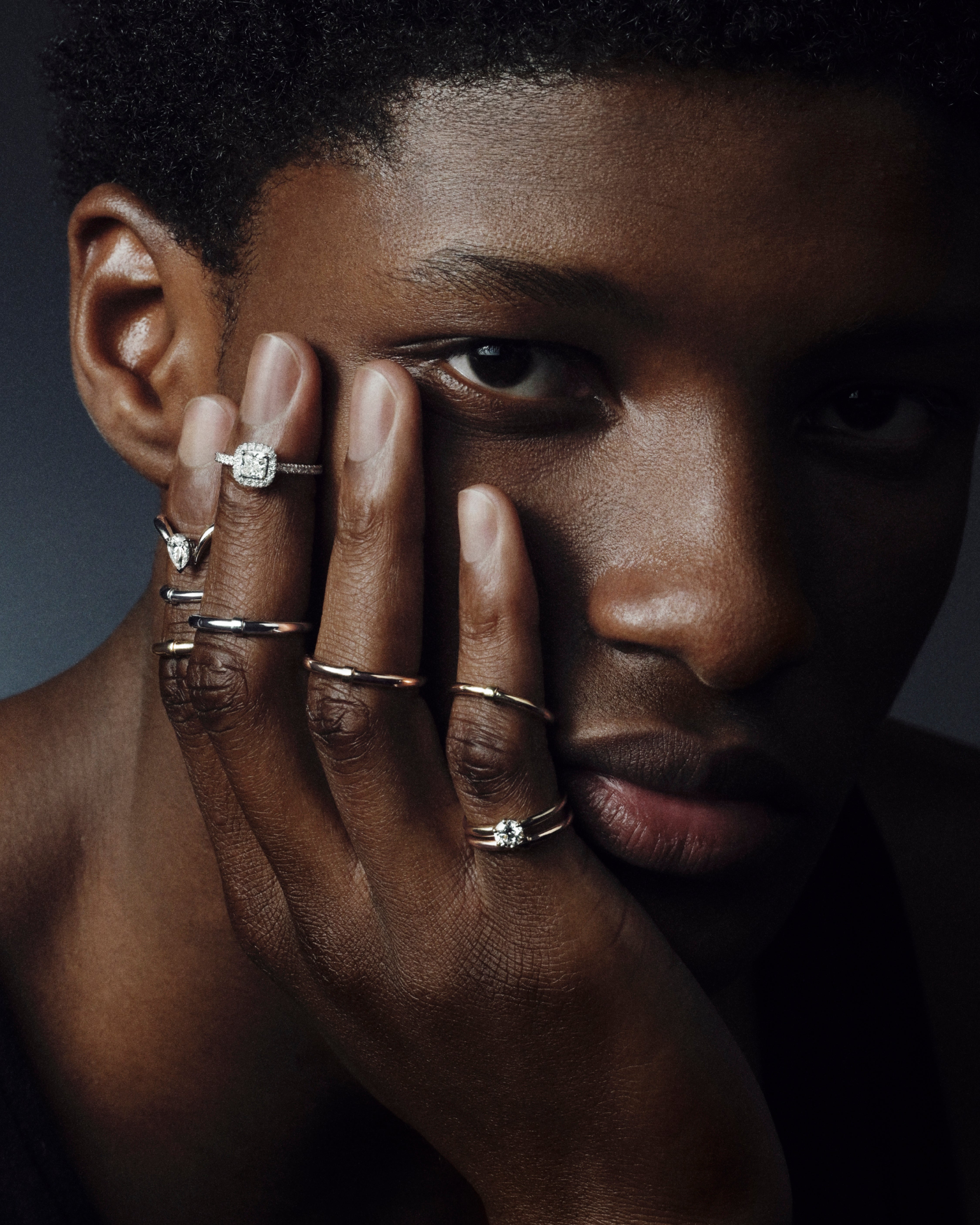
Different engagement ring styles
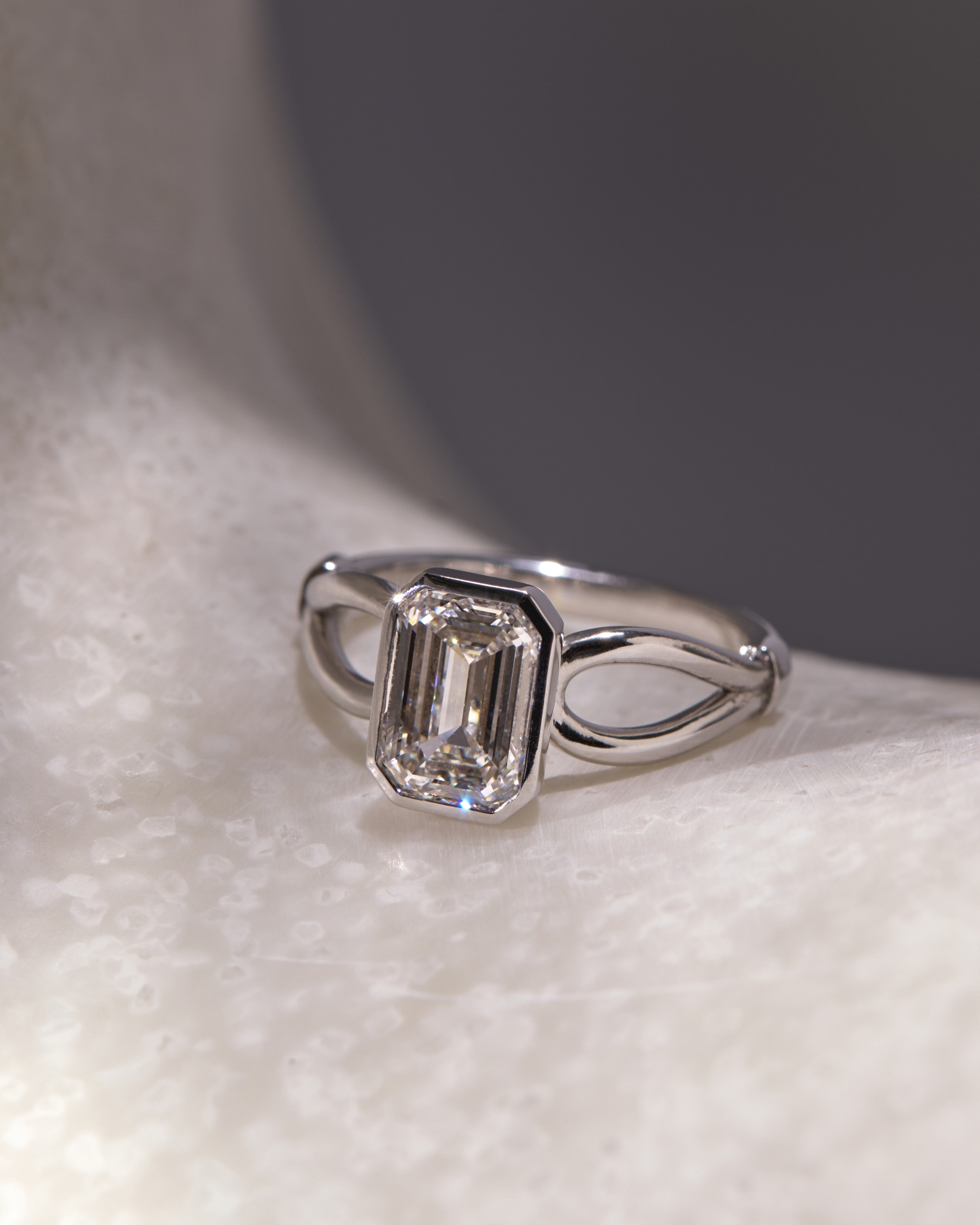
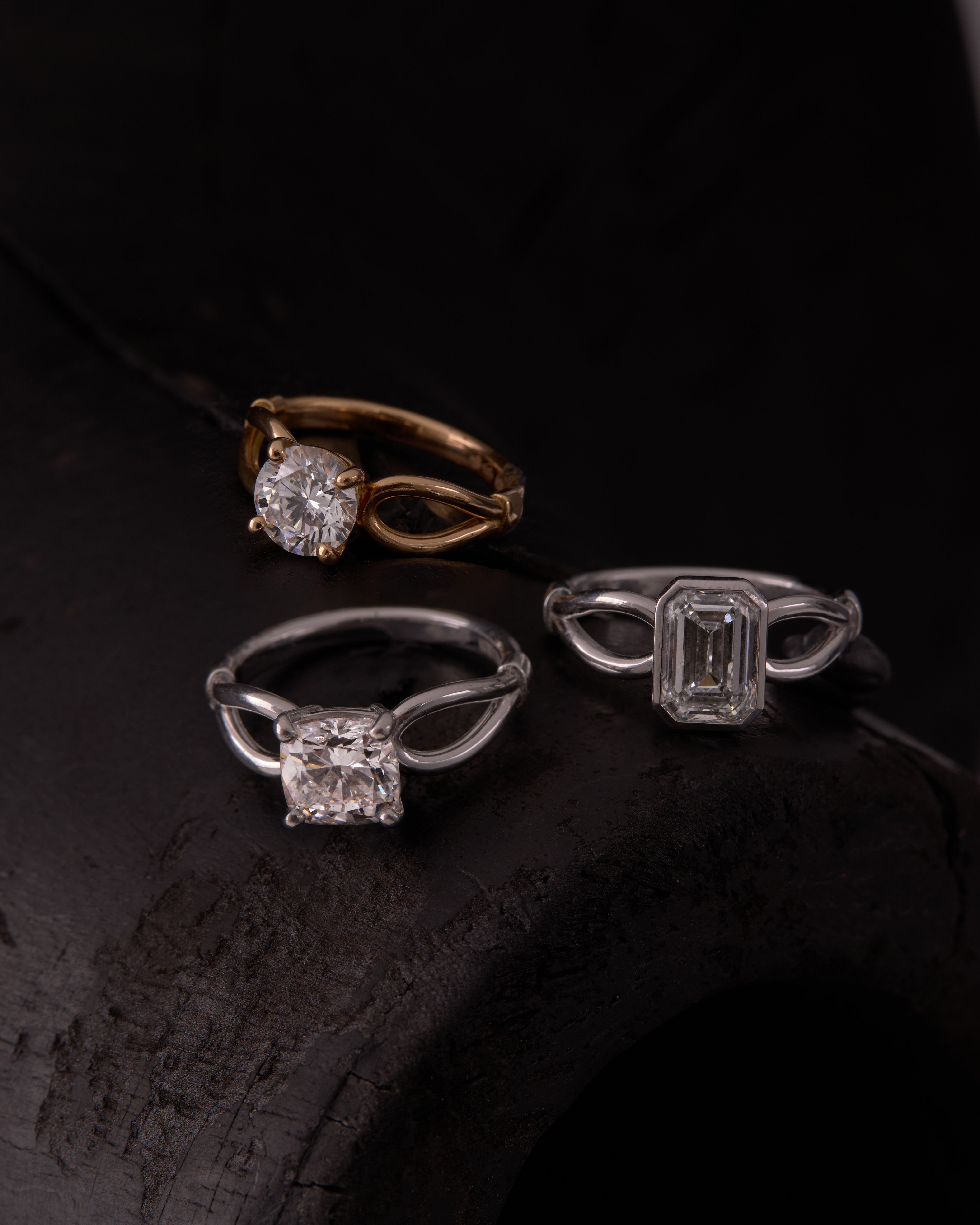
The solitaire : The solitaire is the most classic and timeless engagement ring style. It features a single central gemstone, most often a diamond, set on a band of white gold, yellow gold, rose gold, or platinum. This design highlights the center stone, making it the true focal point of the ring. A solitaire is ideal for those who appreciate understated elegance and timeless beauty.
The halo : Halo rings feature a central stone surrounded by a circle of smaller gemstones, typically diamonds. This design enhances brilliance and creates the illusion of a larger center stone. Halos can be single or double, with one or two rows of surrounding stones. They are perfect for those who love radiant, glamorous designs.
The three-stone ring (trilogy) : This style features a central gemstone flanked by two smaller stones, often diamonds or other precious gems. Each stone symbolizes the past, present, and future of the couple, adding strong emotional meaning. Trilogy rings are ideal for those seeking both symbolism and visual impact.
Vintage rings : Inspired by past eras, vintage rings are characterized by intricate details and ornate designs. They may include filigree work, engraving, and unique stone cuts. This style appeals to those who appreciate timeless elegance and jewelry with a sense of history.
Modern rings : Modern engagement rings are defined by clean lines and minimalist aesthetics. They may incorporate geometric shapes, asymmetrical settings, or unconventional metals such as titanium or palladium. This style suits those who prefer a bold, contemporary look.
Bohemian style : Bohemian rings embrace natural and organic elements, including colored gemstones, textured finishes, and nature-inspired designs. This style is perfect for those with an artistic sensibility and a love for unconventional jewelry.
Choosing a ring that reflects your partner’s personality
Observe their style : Look at the jewelry they wear regularly. Do they prefer white gold, yellow gold, rose gold, or platinum? Are their pieces simple and refined, or more detailed and expressive? These clues can guide your choice.
Consider their lifestyle : If they lead an active lifestyle, a lower, more secure setting may be more suitable. For a more formal environment, a refined and elegant design may be preferable.
Take their fashion preferences into account : A love for vintage fashion may point toward intricate, antique-inspired designs, while a preference for contemporary style may suggest a minimalist and modern ring.
Seek advice from close ones : Friends or family members can provide valuable insight into your partner’s tastes and help you make a more informed choice.
Consider a bespoke design : If you are unsure, a custom-made ring is a meaningful option. At Mazarin, we offer bespoke creations developed through a creative dialogue with Keagan Ramsamy. Each piece is designed to reflect your original vision before being carefully crafted in the Maison’s workshops, resulting in a truly unique and personal jewel.
Considering hand size and shape
Which ring shapes suit different hand types ?
Choosing an engagement ring that harmonizes with your partner’s hand size and shape can enhance not only the ring itself, but also the natural beauty of their hands.
Small hands and slender fingers : Delicate and understated rings are ideal. A solitaire with a modest-sized diamond (for example, one carat or less) adds elegance without appearing oversized. Slim bands in white or rose gold are particularly flattering. Round, oval, and marquise shapes are excellent choices, as they visually elongate the fingers.
Small hands and short fingers : Opt for designs that create the illusion of length. Diamond shapes such as oval, pear, and marquise are perfect for elongating the fingers. Low-profile settings or V-shaped designs can also enhance this effect. Avoid overly wide stones, which may appear disproportionate.
Wide hands and thicker fingers : These proportions can carry bolder and larger designs. Bigger diamonds or halo styles that add brilliance and width are particularly suitable. Shapes such as emerald, Asscher, and cushion cuts are especially flattering. Wider bands in yellow gold or platinum help create a balanced look.
Wide hands and long fingers : More intricate and elaborate designs work beautifully. Styles such as trilogy rings or double halos help fill the hand and create visual harmony. Diamond shapes like emerald, cushion, and pear are excellent options. Wider, more detailed settings in white gold or platinum enhance both presence and elegance.
Medium-sized hands : Medium hands offer great versatility. Most diamond shapes and settings will suit this hand type. The choice can therefore be guided primarily by personal style and preference, whether it be a classic solitaire, a radiant halo, or a vintage-inspired design.
How to measure ring size accurately
Using a measuring tape or paper strip
Wrap a flexible measuring tape or a strip of paper around the base of the finger. Mark where the ends meet, then measure the length with a ruler to determine the circumference in millimeters. Use a ring size conversion chart to find the corresponding size.
Using a ring sizer : Many jewelers provide complimentary ring sizers. Try different sizes until you find one that fits comfortably—secure but not too tight.
Note the indicated size.
Using an existing ring : If your partner already wears a ring on the same finger, you can temporarily borrow it. Have it measured by a jeweler to determine the correct size. Make sure it is worn on the same finger, as sizes can vary.
Asking friends or family discreetly : Close friends or family members may already know your partner’s ring size. They can also help you find out discreetly, for example by suggesting trying on rings for another occasion.
Using online tools or apps : Some online jewelers offer virtual sizing tools or mobile apps to measure ring size at home.
Follow the instructions carefully to ensure an accurate result.
Customization options
Engraving: a personal touch to add to your ring
Sentimental messages :
Engraving a meaningful message is a timeless and elegant choice. It can be a short phrase, a romantic quote, or even a line of poetry that reflects your relationship. Examples include “Forever,” “My eternal love,” or “Our story begins.”
Important dates :
Engraving a significant date—such as the day you met, your proposal, or your wedding date—is a subtle yet powerful way to personalize a ring. It transforms the piece into a lasting reminder of meaningful moments.
Initials or names :
Initials or full names are classic engraving choices. You may opt for combined initials such as “A & J,” or full names for a more personal and intimate touch.
Symbols and icons :
Beyond words and dates, some couples choose to engrave symbols with personal meaning. Hearts, stars, infinity signs, or more unique motifs can represent shared memories, passions, or values.
Different languages and alphabets :
Using another language—Latin, Greek, Hebrew, or any language that holds significance—adds a distinctive and personal dimension to the engraving.
Bespoke ring creation
Choose a trusted jeweler :Working with an experienced and reputable jeweler is essential when creating a bespoke ring. Choosing Mazarin ensures a unique piece, crafted with precision and tailored to your vision.
Define your vision :
Before meeting with a jeweler, take time to consider your preferences. Think about the metal (white gold, yellow gold, rose gold, or platinum), the ring style (solitaire, halo, vintage, modern), and the shape of the center stone (round, oval, emerald, cushion).
Select materials and gemstones :
In collaboration with your jeweler, choose the materials and stones that will define your ring. Beyond diamonds, you may also consider gemstones such as sapphires, emeralds, or rubies for a distinctive touch.
Sketch and visualize the design :
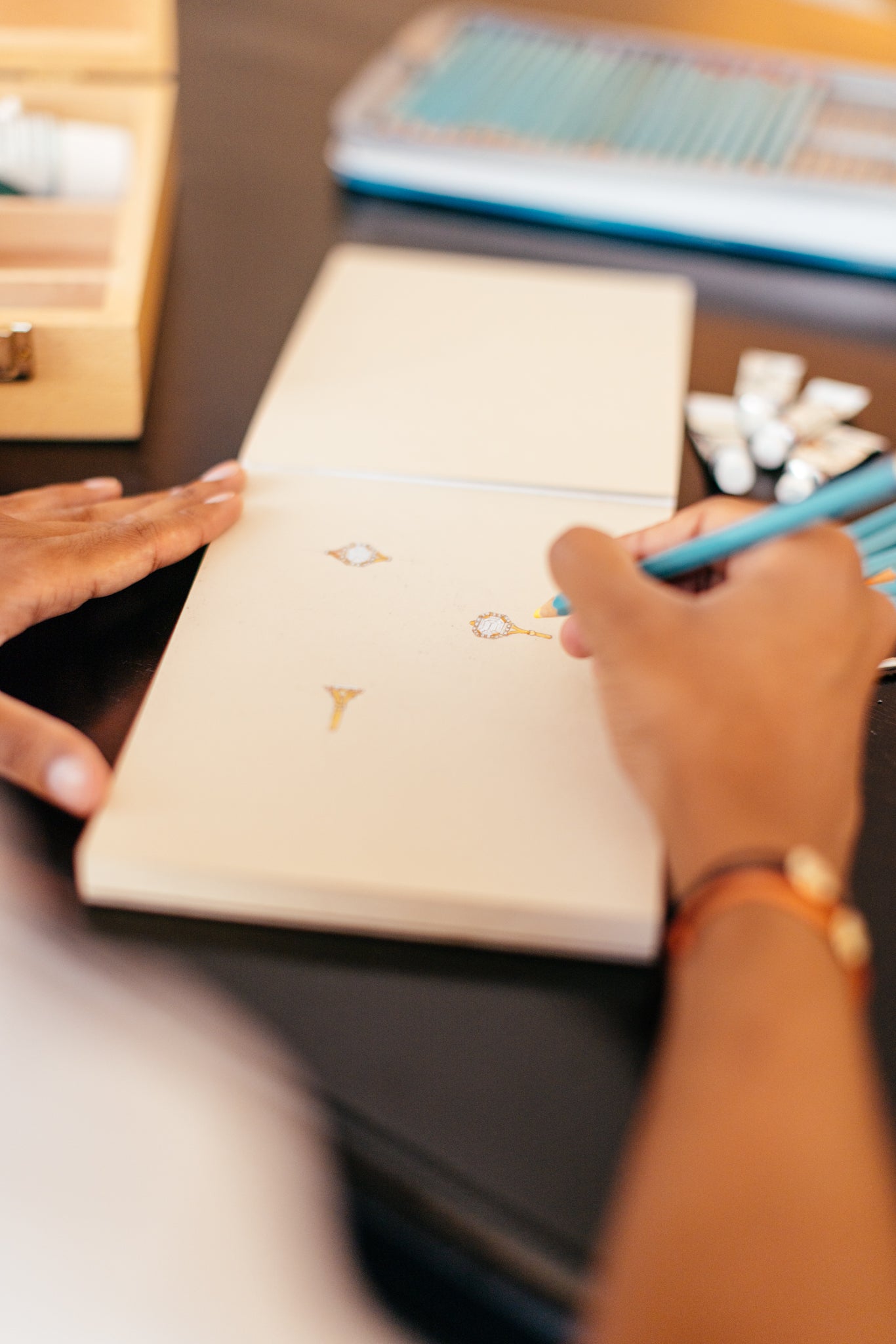
The jeweler will create sketches or 3D renderings based on your ideas. This step allows you to visualize the design and refine details before production begins.
Add personal details :
Incorporate meaningful elements such as custom engravings, filigree details, or symbolic features that reflect your story and your partner’s personality.
Approve and finalize :
Once the design is approved, the crafting process begins. This can take several weeks, so it is important to plan ahead if you have a specific proposal date in mind.
Final inspection and adjustments :
After completion, carefully review the ring to ensure it matches your expectations. Discuss any final adjustments with your jeweler before completing your purchase.
Practical considerations and after-sales service
Everyday comfort and wearability
Ring size :
The ring should fit perfectly—neither too loose nor too tight. An ill-fitting ring can cause discomfort and may slip off the finger. Use the methods mentioned earlier to measure the correct size and consider having the ring adjusted by a jeweler if necessary.
Setting design :
Rings with high settings or intricate details may catch on clothing or hair, which can be inconvenient for everyday wear. Opt for designs with smooth settings and rounded edges to ensure greater comfort.
Weight and band thickness :
Very heavy or thick rings can become uncomfortable over time. Choose a ring that is lightweight and proportioned to your partner’s hand and finger for optimal wearability.
Choice of metal :
Some metals may cause skin irritation or allergies. White gold, yellow gold, rose gold, and platinum are generally well tolerated, but it is important to check the composition and avoid alloys containing nickel if your partner has sensitive skin.
Shape of the stone :
Stones with sharp edges or rough surfaces may cause discomfort. Softer shapes with rounded edges, such as round or oval cuts, are often more comfortable for everyday wear.
Stone security :
Ensure that the gemstone is securely set to prevent it from loosening or falling out. Well-crafted prongs or bezel settings offer increased protection while maintaining elegance.
Warranties and maintenance services
Ring warranty : Make sure the engagement ring comes with a warranty covering manufacturing defects and quality issues. Most jewelers offer at least a one-year warranty, but it is important to review the terms and conditions carefully.
Maintenance and cleaning services : Regular care helps preserve the ring’s brilliance. Many jewelers offer complimentary or preferential cleaning services, as well as periodic inspections to check the condition of the stone and setting.
Resizing services :
Finger size can change over time. Check whether your jeweler offers complimentary or discounted resizing within a certain period after purchase.
Repairs and stone replacement :
In case of damage or stone loss, it is important to know whether your jeweler provides repair or replacement services. Some also offer protection plans to cover such incidents.
Diamond certification :
If your ring features a diamond, ensure it is accompanied by a certificate from a recognized gemological laboratory such as GIA or HRD. This guarantees the authenticity and quality of the stone.
Ring insurance :
Consider insuring your engagement ring to protect against loss, theft, or accidental damage. Many home insurance policies offer the option to include high-value jewelry.