Une question?

Livechat
Whatsapp
+33 7 86 72 17 23
Téléphone
+33 1 76 21 87 70
RDV
E-mail

Cut: the key factor in a diamond’s brilliance


The art and science of cut

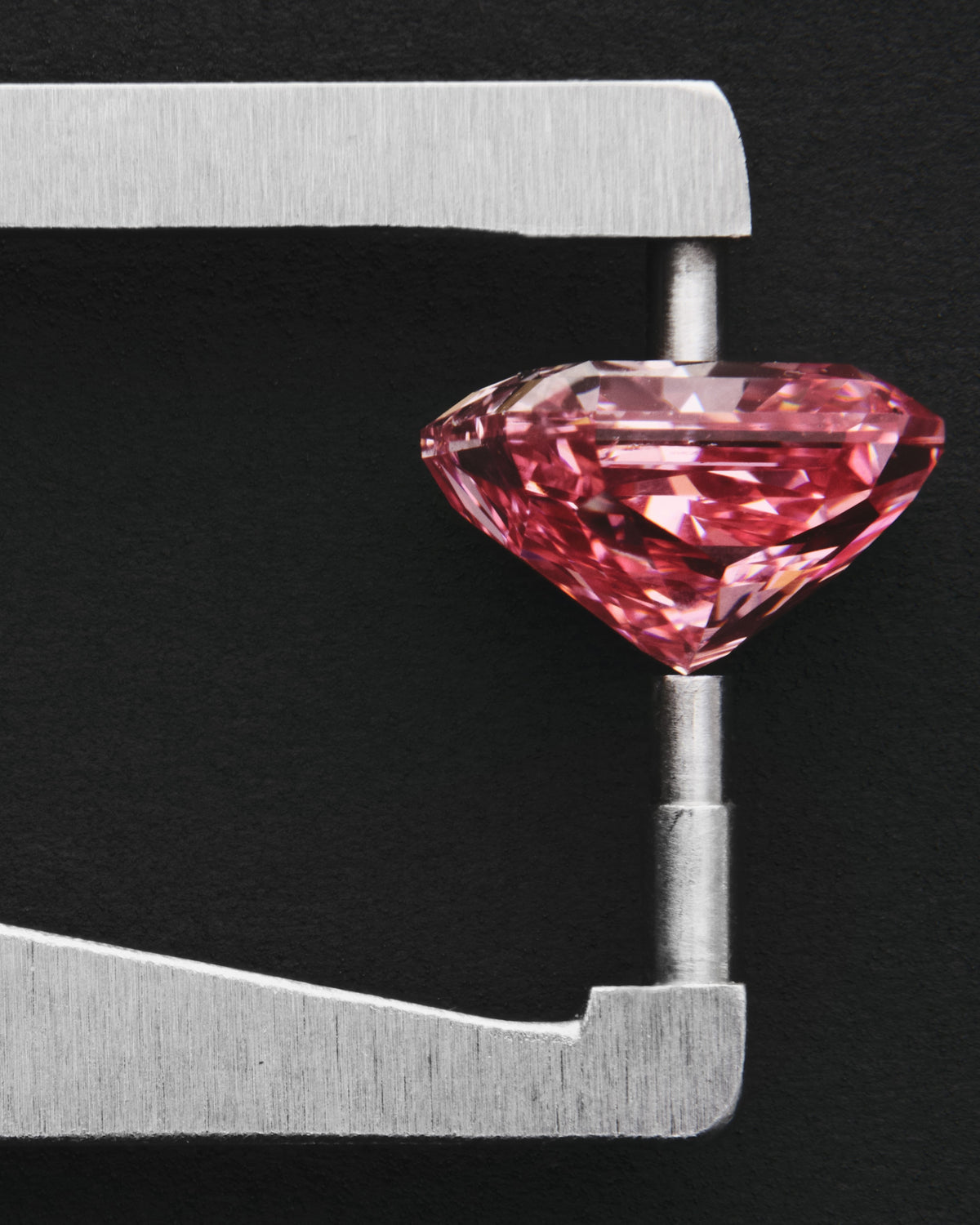
In the evaluation of diamonds through the 4Cs, cut, clarity, color, and carat, the cut plays a crucial role in determining a diamond’s quality and value. A well-executed cut maximizes brilliance, allowing the gemstone to reflect light with exceptional intensity. Each facet is precisely shaped to enhance the diamond’s sparkle and fire. A high-quality cut can also help mask slight color imperfections or small inclusions, improving the overall appearance of the stone.

For each creation, Mazarin seeks diamonds with perfectly balanced proportions, harmonious symmetry, and impeccable polish. Pear, emerald, and brilliant cuts are particularly celebrated.

Different shapes and cutting styles

Diamonds come in a variety of shapes, each offering its own style and character. The most common include:

Round (brilliant): the most popular shape, known for its maximum brilliance thanks to its 57 or 58 perfectly proportioned facets.

Princess: a modern square cut that combines brilliance with geometric elegance.

Oval: elongates the finger while offering brilliance close to that of a round cut.

Pear: elegant and refined, combining the softness of an oval with a pointed tip.

Emerald: recognizable by its step-cut facets, highlighting the clarity and transparency of the stone.

It is important to distinguish between the shape, which refers to the overall appearance of the stone, and the quality of the cut, which depends on the diamond’s proportions and precision.

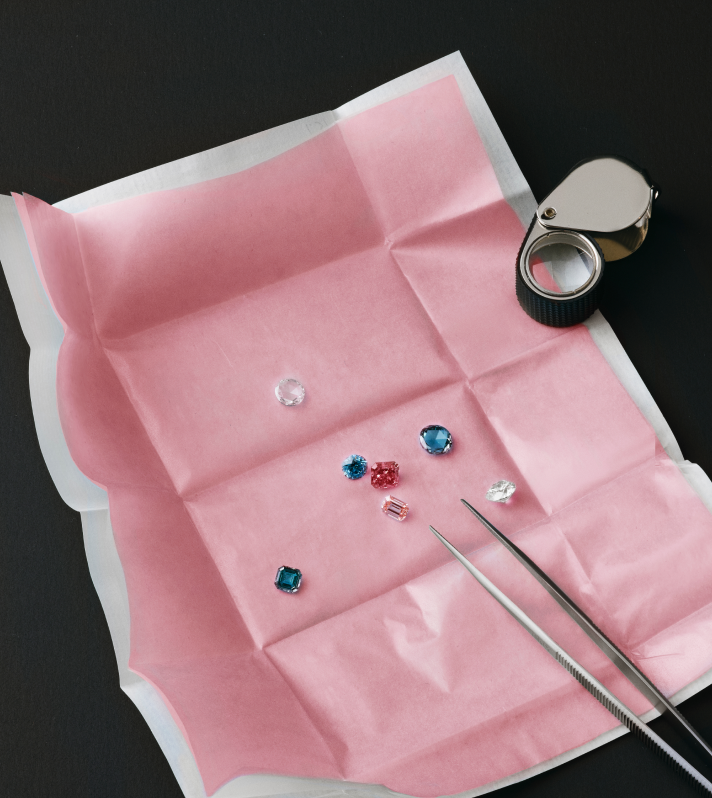
Pierres précieuses colorées sur papier rose avec pince joaillier et loupe d’observation.

Cut: the key factor in a diamond’s brilliance


Carat as a measure of weight

The carat of a diamond is one of the most easily identifiable characteristics and one of the most significant in terms of value. Diamond weight is measured in carats, with one carat equal to approximately 0.2 grams. The higher the carat weight, the rarer and more valuable the diamond. However, it is important to understand that carat weight does not necessarily correspond to physical size. A diamond may appear larger or smaller depending on its cut and depth, which influence its visual appearance.

How weight influences value

In terms of value, carat weight has a direct impact on the price of a diamond. Generally, the heavier the diamond, the higher its price, assuming the other 4C criteria remain constant. However, a diamond’s value is not determined by carat weight alone. Cut quality, color, and clarity also play a crucial role in defining its overall worth.

While carat is an important factor when choosing a diamond, it is essential to consider all four Cs together to fully assess the quality and value of a gemstone.

Clarity: assessing a diamond’s purity


Diamond clarity levels: classification of inclusions and imperfections

Diamond clarity refers to a stone’s degree of purity, determined by the presence or absence of internal inclusions and surface blemishes. This assessment follows an international grading scale established by gemological laboratories such as the GIA, ranking diamonds from flawless to included.

The rarest diamonds are graded Flawless (FL), with no visible imperfections even under 10x magnification. Next are Internally Flawless (IF) diamonds, which are free of internal inclusions and may only show very slight surface marks. Very Very Slightly Included (VVS1 and VVS2) diamonds feature exceptional purity, with microscopic inclusions that are extremely difficult to detect under magnification.

Very Slightly Included (VS1 and VS2) diamonds offer an ideal balance between purity and brilliance. Their inclusions are minimal and invisible to the naked eye, preserving both the beauty and sparkle of the stone. Slightly Included (SI1 and SI2) diamonds contain small inclusions that are generally not visible without magnification, while Included (I1 to I3) diamonds have visible inclusions that may affect transparency or brilliance.

Diamonds selected for Mazarin collections typically fall within the VS2 to VVS1 range, corresponding to high clarity standards. This level ensures exceptional transparency and a pure, timeless brilliance, a true signature of the Maison’s craftsmanship.

Perceived clarity to the naked eye

Although clarity grading relies on expert evaluation under magnification, differences between higher grades are often imperceptible to the naked eye. What truly matters is the visual impression and overall brilliance of the stone as it interacts with natural light.

From VS2 clarity and above, inclusions are generally invisible without magnification. These diamonds are often described as “eye-clean,” offering a flawless appearance without the premium associated with IF or FL grades. This makes them an ideal choice for those seeking a balance between visual perfection and value.

Finding the right balance between clarity and cost

Choosing the right level of clarity ultimately depends on your priorities and budget. If purity is a key consideration, diamonds in the VS or VVS range provide an excellent balance between transparency and value, with inclusions that remain invisible to the naked eye while maintaining exceptional brilliance.

For those looking to optimize their investment, it can be wise to allocate a greater portion of the budget to cut quality, as it has a more significant impact on perceived brilliance than slight differences in clarity.

The founders of Mazarin, both trained gemologists, bring their expertise and exacting standards to every creation. Their discerning eye and attention to detail ensure a selection of diamonds that are not only beautiful, but also perfectly balanced and enduring.

Color: choosing the right diamond hue


Understanding the color scale

While clarity reveals a diamond’s inner purity, color expresses its personality and the way it interacts with light. After considering transparency and brilliance, attention naturally turns to the subtle hue that distinguishes each stone, an essential element in appreciating the full beauty of a diamond.

The diamond color scale ranges from D (colorless) to Z (lightly tinted). Diamonds in the highest categories are the most sought after for their purity and brightness, as they allow light to pass through with maximum intensity.

As one moves down the scale, subtle yellow or brown tones may appear, influencing both the perceived brightness and value of the stone. However, these nuances can also bring a unique charm, especially when paired with warm metals such as yellow or rose gold.

Diamonds in the higher color grades are rarer and more valuable, but slightly tinted stones can be just as appealing to the naked eye and often more accessible. Ultimately, the choice of color depends on personal preference, style, and budget.

Diamonds in Mazarin collections typically range from D to H, offering a perfect balance between whiteness, brilliance, and visual harmony.

Selecting the right color

Consider your skin tone: Certain diamond hues complement different skin tones. Warmer shades, such as faint yellow or champagne tones, can enhance warmer complexions, while colorless diamonds often suit cooler tones.

Think about how the piece will be worn: For an engagement ring or everyday jewelry, a neutral shade is often preferred for versatility. For more distinctive or statement pieces, a unique hue or even a fancy color diamond can be considered.

Consider symbolic meaning: Some buyers attach importance to the symbolism of color. A colorless diamond can represent purity and eternity, while colored diamonds may express individuality and originality.

Compare stones in natural light: Whenever possible, view diamonds in person to see how different shades appear under natural light. This helps you identify the tone that best enhances the stone.

Trust your instinct: Choose the color that resonates with you. Whether perfectly colorless or subtly tinted, the right diamond is the one that brings you the most pleasure.

The impact of color on brilliance and price

Color directly influences both the appearance and the value of a diamond. The more colorless the stone, the more purely it reflects light, enhancing its brilliance and increasing its value.

However, a slight tint can sometimes add character, especially when set in warm metals such as rose or yellow gold. A subtle hue does not necessarily diminish a diamond’s beauty. It all depends on the desired effect and the overall harmony of the piece.

The role of a diamond certificate in evaluating the 4Cs


Understanding grading and reports

Every high-quality diamond is accompanied by a certificate issued by a recognized laboratory such as GIA, HRD, or IGI. This document verifies the stone’s origin and its characteristics according to the 4Cs: cut, color, clarity, and carat, ensuring an objective and standardized evaluation.

The importance of choosing a certified diamond

Choosing a certified diamond guarantees both authenticity and traceability. Certificates issued by reputable gemological laboratories confirm each stone’s characteristics according to strict international standards. They provide full transparency and give buyers the confidence needed to make an informed investment.

At Mazarin, all diamonds from one carat and above are accompanied by an official certificate issued by a renowned independent laboratory. This document confirms the quality, cut, color, clarity, and weight of the stone, ensuring it meets the highest gemological standards.

Mazarin’s buying guide


We believe that choosing a diamond is a true encounter between beauty, knowledge, and emotion. Each stone is unique, and our role is to guide you in finding the one that truly reflects you.

We encourage you to pay close attention to the 4Cs of diamonds—cut, color, clarity, and carat—whose balance defines the quality and character of each gem. An exceptional diamond is always the result of perfect harmony between these four criteria.

Our gemological expertise allows us to support you at every step, offering precise and personalized guidance. We take the time to explain the nuances of each stone, ensuring your choice is both informed and aligned with your desires.

We also invite you to consider the purpose of your jewelry, whether it is an engagement ring, an everyday piece, or a statement creation. This reflection helps define your priorities between brilliance, purity, and size, allowing you to create a piece that will endure over time.

For those seeking something truly unique, we offer bespoke creations, designed and crafted in accordance with the finest traditions of French jewelry making. Each Mazarin piece becomes a personal work of art, created to stand the test of time with elegance and grace.

Choosing a Mazarin diamond means investing in a timeless piece, crafted with precision and passion—a jewel that embodies light, beauty, and the individuality of the person who wears it.

Conclusion


At Mazarin, we are committed to offering an exceptional purchasing experience, guided by transparency, integrity, and recognized expertise in jewelry and gemology. We support each client with care, helping them find the diamond and creation that truly reflect their desires, style, and personal story.

We believe in the value of time, in enduring beauty, and in the power of transmission. Each piece is designed to stand the test of time with elegance, combining timeless design with the highest standards of quality.

FAQ:


Quelle est la meilleure qualité de diamant ?

Si l'on considère les 4 C, un diamant considéré comme étant de la plus haute qualité serait classé avec une coupe excellente, une couleur incolore ou très légèrement teintée, une clarté sans défauts visibles sous un grossissement de 10 fois (comme Internally Flawless ou Flawless), et un poids en carats significatif, si cela correspond à vos préférences.

En fin de compte, le meilleur diamant pour vous sera celui qui correspond le mieux à vos critères personnels, à vos besoins et à votre budget.

Comment sont classés les diamants ?

Les diamants sont classés en fonction de plusieurs critères, souvent regroupés sous le terme "les 4 C", comme expliqué ci-dessus.

Comment savoir si c'est un vrai diamant ?

Test de la chaleur : Tenez le diamant au-dessus d'une flamme pendant quelques secondes, puis plongez-le immédiatement dans de l'eau froide. Le diamant véritable ne sera pas affecté par la chaleur, tandis que la plupart des pierres de substitution se fissureront ou se briseront.

Test de la respiration : Placez le diamant sur votre bouche et respirez dessus comme si vous essayiez de brouiller un miroir. Si la pierre reste propre, il est probable qu'il s'agisse d'un vrai diamant, car les diamants ont des propriétés de répulsion pour la graisse. Si la pierre se couvre de buée, elle est probablement fausse.

Test du journal : Placez le diamant, la pointe vers le bas, sur un morceau de texte imprimé dans un journal. Si vous ne pouvez pas lire le texte à travers le diamant, il est probable qu'il soit authentique. Les diamants sont des conducteurs de chaleur exceptionnels et dispersent la lumière de manière efficace, ce qui les rend difficiles à voir à travers.

Examen professionnel : Si vous avez un doute sur l'authenticité d'un diamant, il est recommandé de le faire évaluer par un expert en gemmologie ou un joaillier qualifié. Ils peuvent utiliser des outils et des techniques spécialisés, tels que les loupes binoculaires, les microscopes et les tests de conductivité thermique, pour déterminer avec précision si le diamant est authentique.

Quel est le poinçon du diamant ?

Les diamants ne portent généralement pas de poinçon spécifique comme les métaux précieux tels que l'or ou le platine. Cependant, ils peuvent être certifiés par des laboratoires gemmologiques réputés comme le Gemological Institute of America (GIA) ou l'European Gemological Laboratory (EGL), qui fournissent des rapports d'authenticité et de qualité pour les diamants.

Les rapports gemmologique comprennent généralement des informations détaillées sur les caractéristiques du diamant, telles que sa coupe, sa couleur, sa clarté, son poids en carats et d'autres caractéristiques distinctives. Ces rapports sont considérés comme une preuve de l'authenticité et de la qualité du diamant, et sont souvent demandés lors de l'achat ou de la vente de diamants.