


For millennia, emerald has fascinated the world with the depth of its color and the richness of its history. This green gemstone, belonging to the beryl family, takes its name from the ancient Greek smaragdos, a word that has become synonymous with beauty and renewal. The color of emerald, this very particular green, has crossed civilizations as a symbol of life, love and balance.
In ancient times, emerald was already considered an exceptional stone. In Egypt, Cleopatra had a real fascination with this gem. She had it extracted in mines located in the heart of the desert, thus affirming her status as queen and her attachment to the symbolism of green. This green color, associated with nature and renewal, then embodied eternity and fertility.
Throughout history, kings and rulers of Europe have also collected these rare stones, testifying to their value and rarity. In the New World, the discovery of important deposits in South America strengthened the aura of emerald, making it an essential stone in world jewelry.
Even today, emerald remains a stone full of meaning. It symbolizes rebirth, clarity of mind and a form of inner harmony, making it a particularly popular gem to mark important moments in life, such as a birth or a marriage.
The symbolism of emerald green: meaning and history
Characteristics and technical criteria of emerald
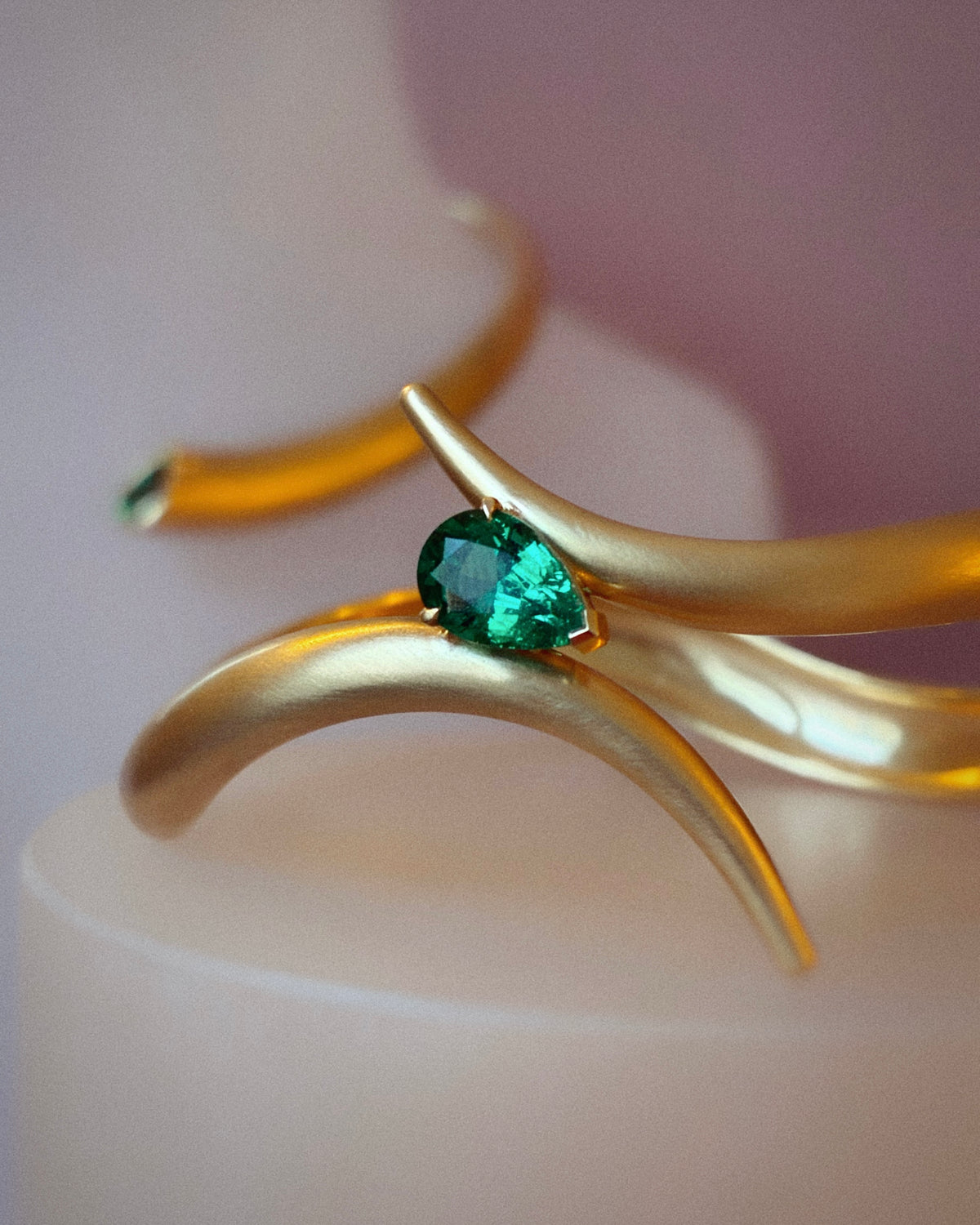
Emerald is distinguished by unique characteristics that directly influence its beauty and value. Its composition is based on beryl, enriched with elements such as chromium or vanadium, responsible for its intense green color.
A high quality emerald exhibits a pure emerald green that is both deep and luminous. The balance between these parameters is essential to reveal the full beauty of the stone. High saturation and balanced tone provide rich color without excess darkness or transparency.
Unlike other gems like diamonds, where purity is paramount, emerald is appreciated for its personality. Its color remains the dominant criterion, well before clarity.
This garden influences the way light passes through the stone, subtly changing its glow and visual perception. A perfectly transparent emerald is extremely rare, which enhances the value of stones exhibiting a harmonious balance of inclusions and clarity.
Thus, each emerald has a unique structure and composition, the result of specific geological conditions, which contribute to its singularity.
Hue, saturation and tone: the 3 pillars of color
The color of an emerald is evaluated according to three fundamental criteria: hue, saturation and tonality. The color corresponds to the dominant green, sometimes slightly bluish or yellowish. Saturation measures the intensity of that color, while hue indicates the lightness or depth of the green.A high quality emerald exhibits a pure emerald green that is both deep and luminous. The balance between these parameters is essential to reveal the full beauty of the stone. High saturation and balanced tone provide rich color without excess darkness or transparency.
Unlike other gems like diamonds, where purity is paramount, emerald is appreciated for its personality. Its color remains the dominant criterion, well before clarity.
The “Garden” of emerald: when inclusions influence brilliance
Inclusions are an integral part of an emerald’s identity. Often called “garden”, they are visible inside the stone and bear witness to its natural formation. Unlike other gemstones, these inclusions are not perceived as flaws, but as a unique signature.This garden influences the way light passes through the stone, subtly changing its glow and visual perception. A perfectly transparent emerald is extremely rare, which enhances the value of stones exhibiting a harmonious balance of inclusions and clarity.
Thus, each emerald has a unique structure and composition, the result of specific geological conditions, which contribute to its singularity.

Shades of green according to geographical origin
Provenance plays a determining role in the color of emeralds. Depending on their origin, stones present distinct nuances, influenced by their composition and the elements present during their formation.
Zambian emeralds, on the other hand, have a colder hue, with slightly bluish undertones. Their transparency is often higher, offering a much appreciated crystalline shine.
In Brazil, stones generally display a lighter color, with a softer tone. These nuances bring valuable diversity to the world of jewelry, making it possible to respond to different aesthetic sensibilities.
This selection is based on an in-depth understanding of gems, carried through the eyes of its founders, Louise de Rothschild and Keagan Ramsamy, both gemologists. It is accompanied by particular attention to the balance of nuances, saturation and light. The stones are chosen for their presence and their ability to reveal all the richness of emerald green.
In the Eboris collection, the lines are designed to accompany the stone without ever constraining it. Bracelets, necklaces, rings or ear clips are designed to highlight the natural color of emerald and reveal its full intensity.
Colombia, Zambia or Brazil: what are the differences in colors?
Colombian emeralds are renowned for their intense and slightly warm green, often considered the gold standard. Their high saturation and natural luminosity give them an incomparable presence.Zambian emeralds, on the other hand, have a colder hue, with slightly bluish undertones. Their transparency is often higher, offering a much appreciated crystalline shine.
In Brazil, stones generally display a lighter color, with a softer tone. These nuances bring valuable diversity to the world of jewelry, making it possible to respond to different aesthetic sensibilities.
Emeralds from Maison Mazarin
At Mazarin, everything starts with stone. Each emerald is carefully selected, taking into account its origin, its color and the quality of its structure.This selection is based on an in-depth understanding of gems, carried through the eyes of its founders, Louise de Rothschild and Keagan Ramsamy, both gemologists. It is accompanied by particular attention to the balance of nuances, saturation and light. The stones are chosen for their presence and their ability to reveal all the richness of emerald green.
In the Eboris collection, the lines are designed to accompany the stone without ever constraining it. Bracelets, necklaces, rings or ear clips are designed to highlight the natural color of emerald and reveal its full intensity.
Emerald in jewelry
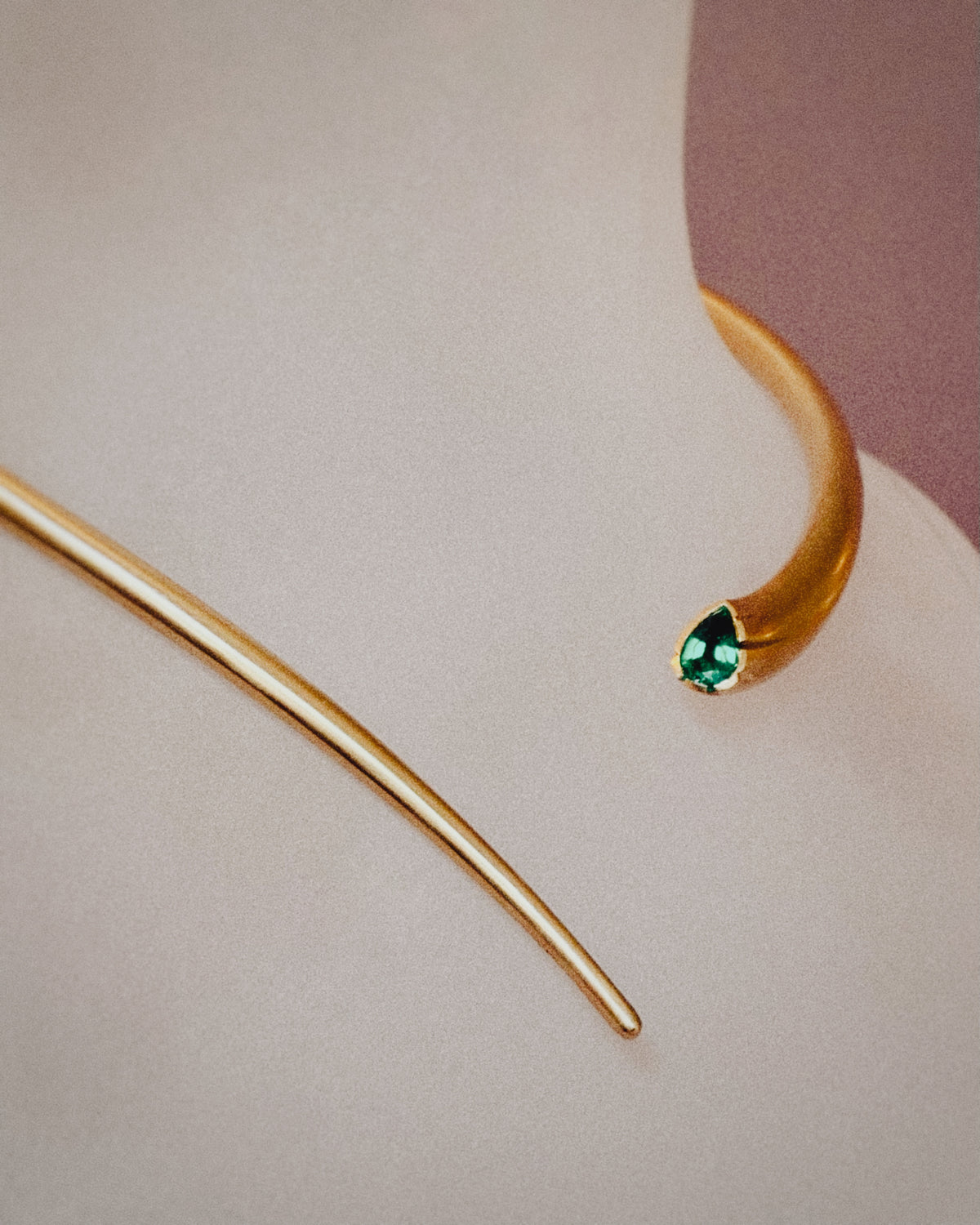
Emerald occupies a special place in the world of jewelry. Its green color, both deep and vibrant, requires precise choices in terms of size, setting and metal.
Yellow gold highlights the warmth of the stone, creating a luminous and timeless contrast. White gold, more discreet, highlights the freshness of green and brings a contemporary touch. Each metal reveals a different facet of the stone, depending on the desired style.
Size also plays a vital role. The emerald cut, with its stepped facets, is particularly suited to this stone. It highlights the clarity, structure and depth of the color, while respecting the nature of the gem.
In a ring, a necklace or earrings, the emerald becomes a real center of attention. It dialogues with the diamond, the ruby or the sapphire, while maintaining a strong identity.
At Mazarin, each creation is designed to let the stone express itself fully. In the Eboris collection, emerald is at the heart of the design. The clean lines, the choice of proportions and the precision of the jewelry gesture reveal all the richness of the color and the singularity of each stone.
Yellow gold highlights the warmth of the stone, creating a luminous and timeless contrast. White gold, more discreet, highlights the freshness of green and brings a contemporary touch. Each metal reveals a different facet of the stone, depending on the desired style.
Size also plays a vital role. The emerald cut, with its stepped facets, is particularly suited to this stone. It highlights the clarity, structure and depth of the color, while respecting the nature of the gem.
In a ring, a necklace or earrings, the emerald becomes a real center of attention. It dialogues with the diamond, the ruby or the sapphire, while maintaining a strong identity.
At Mazarin, each creation is designed to let the stone express itself fully. In the Eboris collection, emerald is at the heart of the design. The clean lines, the choice of proportions and the precision of the jewelry gesture reveal all the richness of the color and the singularity of each stone.
Maintain your emerald to preserve the intensity of its green color
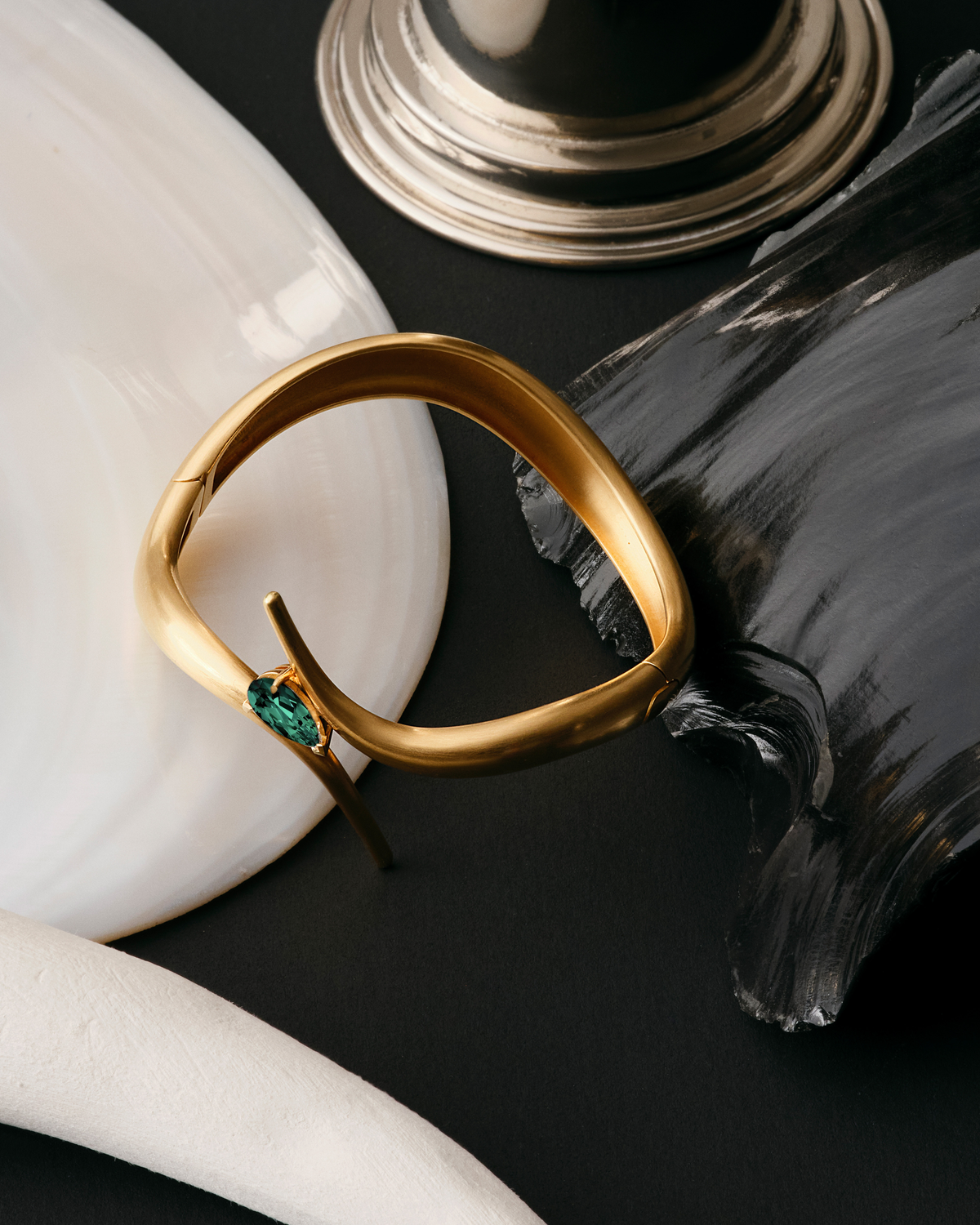
Emerald is a delicate gemstone, whose hardness and structure require special attention. Its sensitivity to shocks and temperature variations requires simple actions to preserve its beauty over time.
It is recommended to avoid chemical products and favor gentle cleaning with lukewarm water. Ultrasound should be avoided, as it can weaken the stone, particularly due to the presence of inclusions.
Regular maintenance helps preserve the intensity of the color and transparency of the stone. Well preserved, an emerald survives the years without losing its shine, becoming an object of transmission steeped in history.
At Mazarin, this approach is part of a global vision of jewelry. Understanding the stones, selecting them carefully and working them with precision allows them to reveal their natural beauty. Emerald, with its unique color and depth, perfectly embodies this philosophy, where each creation becomes the reflection of a balance between nature, know-how and emotion.
It is recommended to avoid chemical products and favor gentle cleaning with lukewarm water. Ultrasound should be avoided, as it can weaken the stone, particularly due to the presence of inclusions.
Regular maintenance helps preserve the intensity of the color and transparency of the stone. Well preserved, an emerald survives the years without losing its shine, becoming an object of transmission steeped in history.
At Mazarin, this approach is part of a global vision of jewelry. Understanding the stones, selecting them carefully and working them with precision allows them to reveal their natural beauty. Emerald, with its unique color and depth, perfectly embodies this philosophy, where each creation becomes the reflection of a balance between nature, know-how and emotion.