Everything you need to know about diamond cutting

The size of the diamond is often considered the most determining factor in the beauty of a stone. Contrary to popular belief, it does not correspond to the shape, but to the way in which the diamond is cut to interact...

What is diamond cutting and why is it crucial?

The size of the diamond is often considered the most determining factor in the beauty of a stone. Contrary to popular belief, it does not correspond to the shape, but to the way in which the diamond is cut to interact with light. Successful cutting allows the stone to reflect, refract and disperse light optimally, revealing its radiance, brilliance and fire.

Among the 4c diamond, size is the only characteristic directly influenced by human know-how. It transforms a rough diamond into a cut diamond capable of enhancing a ring, earrings or any other piece of jewelry. This is why the diamond cut plays an essential role in the choice of a stone intended to accompany the important moments of life.

Distinction between shape and size quality

It is essential to distinguish the shape of the diamond from the quality of its cut. The shape designates the exterior silhouette of the stone: round, princess, pear, fancy... The cut, for its part, evaluates the precision of the facets, their angles, their symmetry and their polishing.

Thus, two diamonds of the same shape can present a very different result depending on the quality of their cut. An attractive shape is not enough: only a controlled size allows light to circulate harmoniously inside the stone.

The influence of cutting on the fire and luster of the stone

When light enters a diamond, it reflects off the internal facets before exiting through the table. A well-proportioned diamond cut maximizes this phenomenon, creating intense fire (color dispersion) and dazzling shine. Conversely, poor pruning lets light escape from the sides or bottom, dulling the overall appearance.

It is this subtle interaction between light and facets that explains why two stones of the same weight and same color can offer a radically different visual result.
What is diamond cutting and why is it crucial?

Criteria for evaluating cut quality (Cut Grade)

The quality of the cut is evaluated according to precise criteria by the major gemological laboratories. It is today recognized as a key parameter in any guide intended to choose a diamond.

The ideal proportions for optimal light reflection

The proportions define the balance between the table, depth and diameter of the diamond. Excessive depth can “hide” weight, while insufficient depth leaks light. These proportions are particularly studied for the round diamond, an absolute reference in terms of optical performance, particularly since the work of Marcel Tolkowsky, pioneer of modern cutting.

The role of symmetry and polish in finishing

The symmetry ensures perfect alignment of the facets, guaranteeing homogeneous reflection of light. Polishing, for its part, influences the surface of the diamond: even invisible to the naked eye, an imperfect finish can alter the brilliance. These elements are an integral part of the cut evaluation, just like the angles and the arrangement of the facets.

The GIA grading scale: from Excellent to Poor

The GIA ranks pruning quality on a scale from Excellent to Poor, including Very Good, Good and Fair. Excellent size ensures optimal light performance and long-lasting value in the market. It is often this level that is favored for emblematic creations, such as an engagement ring or a piece of inheritance jewelry.
Criteria for evaluating cut quality (Cut Grade)

The different waist shapes: from classic to fantasy

The diversity of shapes makes it possible to adapt the diamond to each style, each genre and each jewelry use.

The round brilliant diamond: the absolute reference

The round diamond today represents the majority of global sales. Its brilliant size, designed to optimize the return of light, offers an intense and perfectly balanced shine. This iconic shape has established itself as a reference in jewelry thanks to its ability to fully reveal the natural brilliance of the diamond.

Versatile and timeless, the round diamond naturally finds its place in a solitaire ring, where the stone becomes the purest expression of jewelry know-how. This approach, based on the enhancement of size and light, is found in particular in emblematic creations of the House, such as the Solitaire Amoretto Brillant, designed to reveal all the precision and harmony of a perfectly cut round diamond.

Rectangular and square sizes: Princess, Emerald and Asscher

The princess cut is distinguished by its modern and angular brilliance, while the emerald cut and Asscher favor stepped facets, revealing the purity and inclusions of the stone. These shapes seduce with their graphic elegance and their architectural character.

Elongated shapes: Marquise, Pear and Oval

Elongated shapes, such as the pear or the oval, offer an impression of size that is often greater than the actual diamond carat. Their slender silhouette captures the light subtly and visually elongates the finger, while maintaining a refined balance between elegance and presence. These shapes seduce with their ability to combine character and softness, while highlighting the line of the hand.

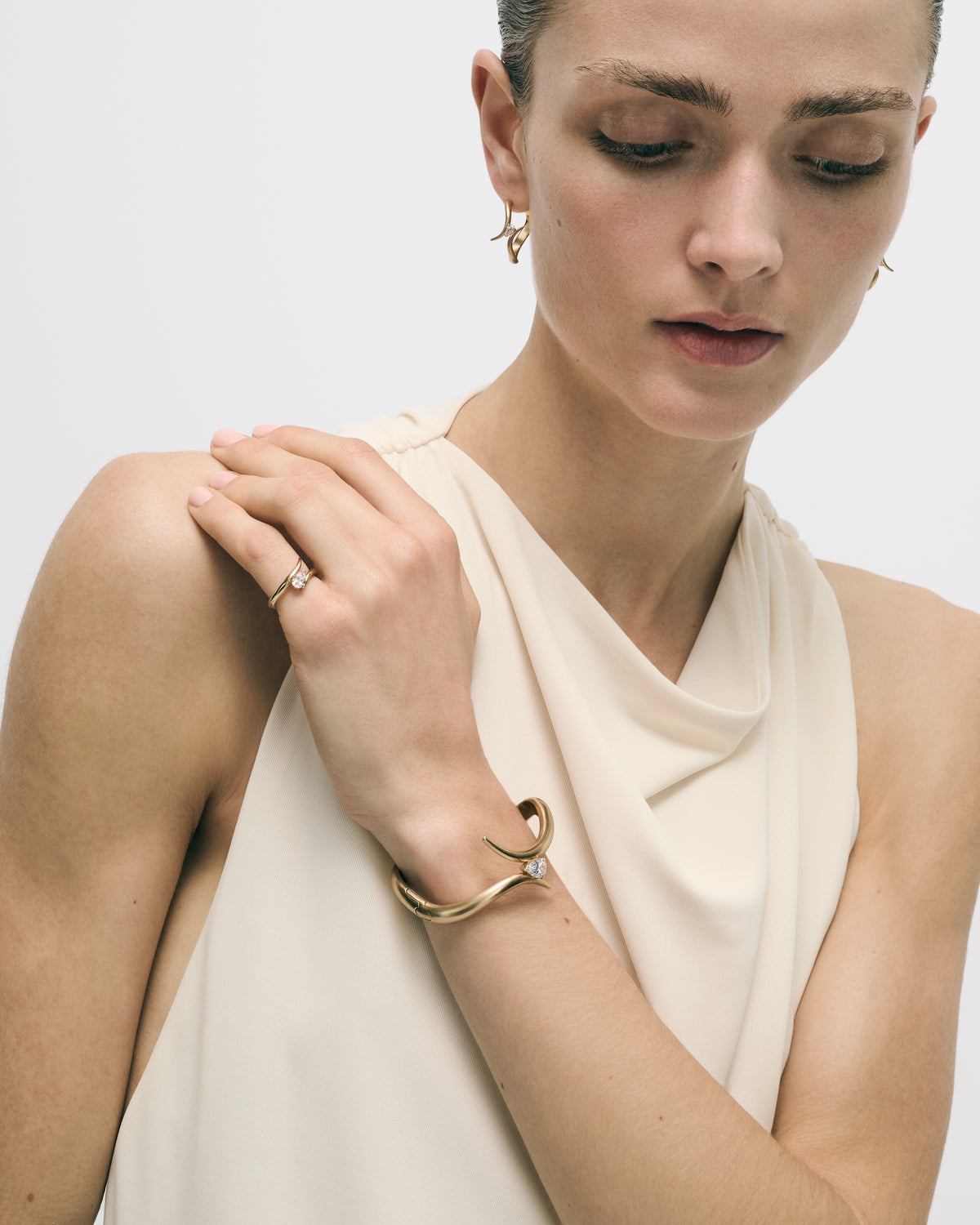
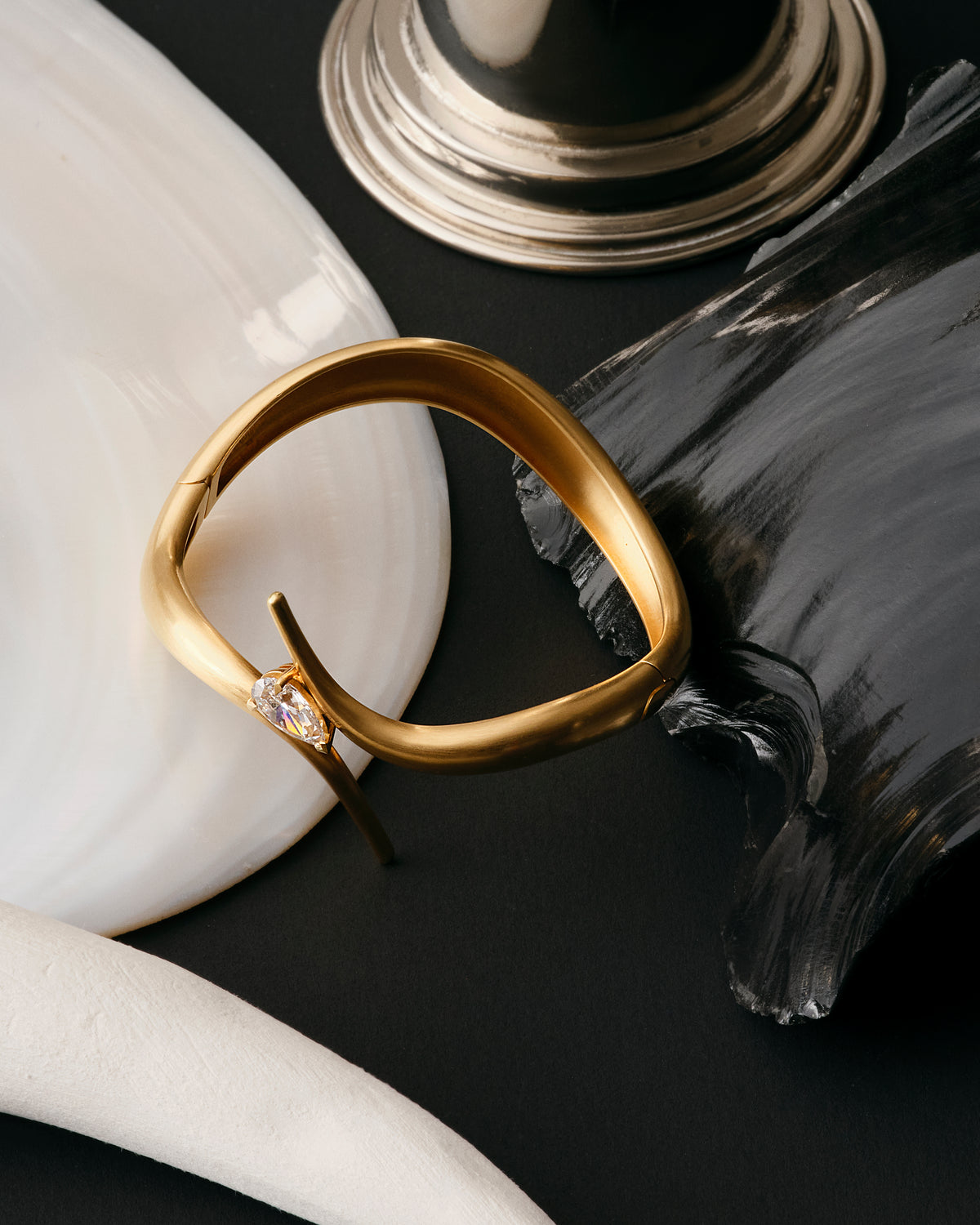
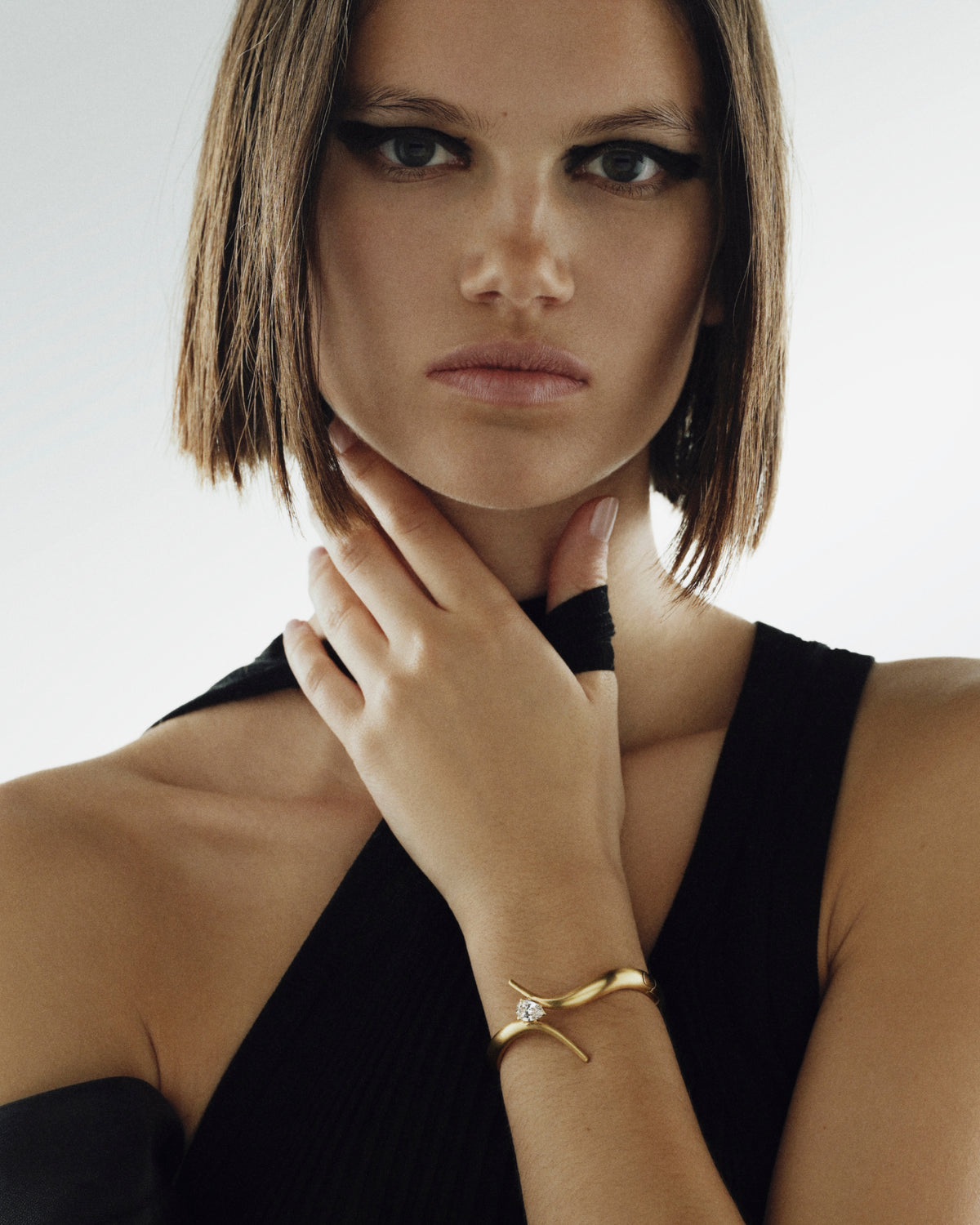
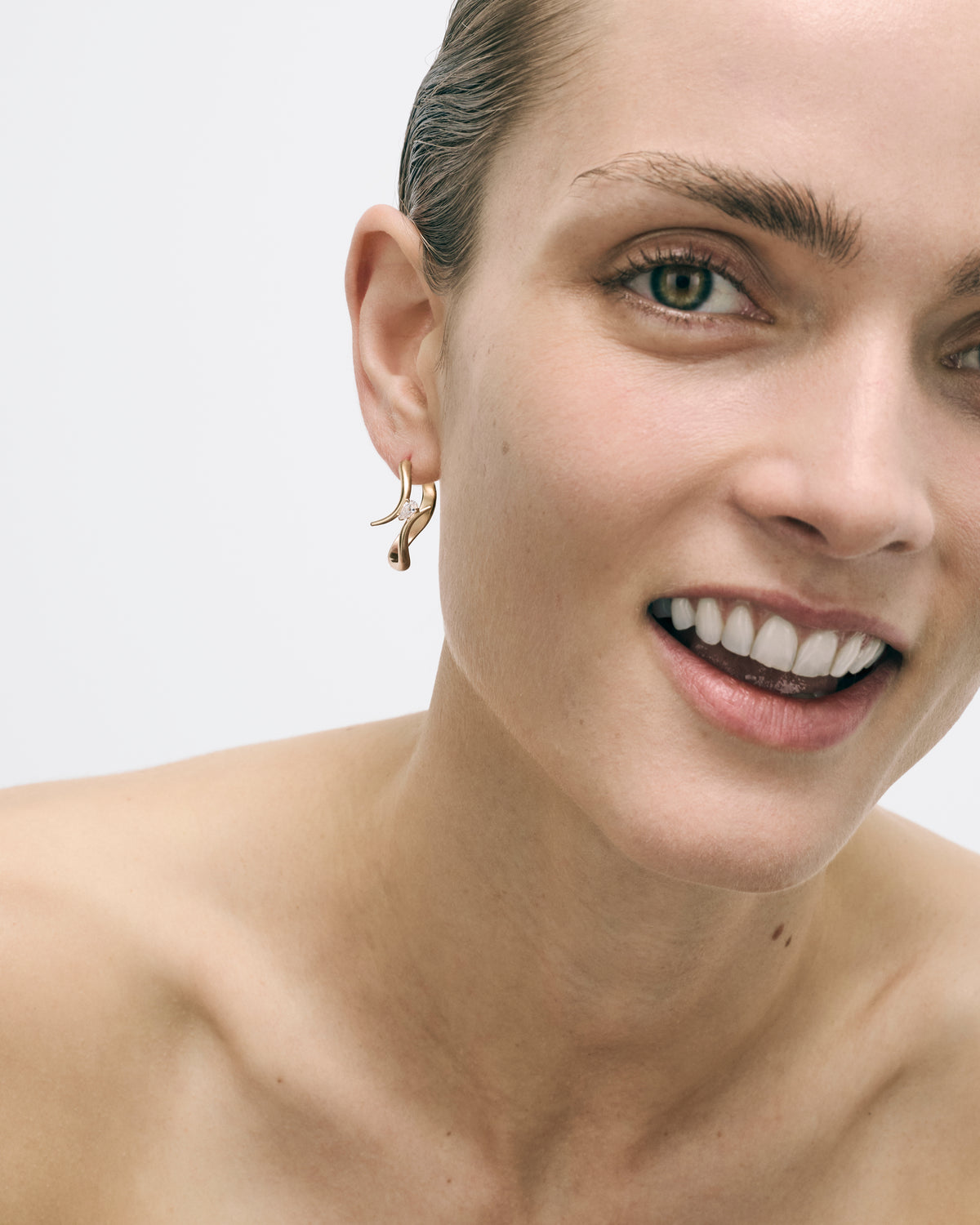
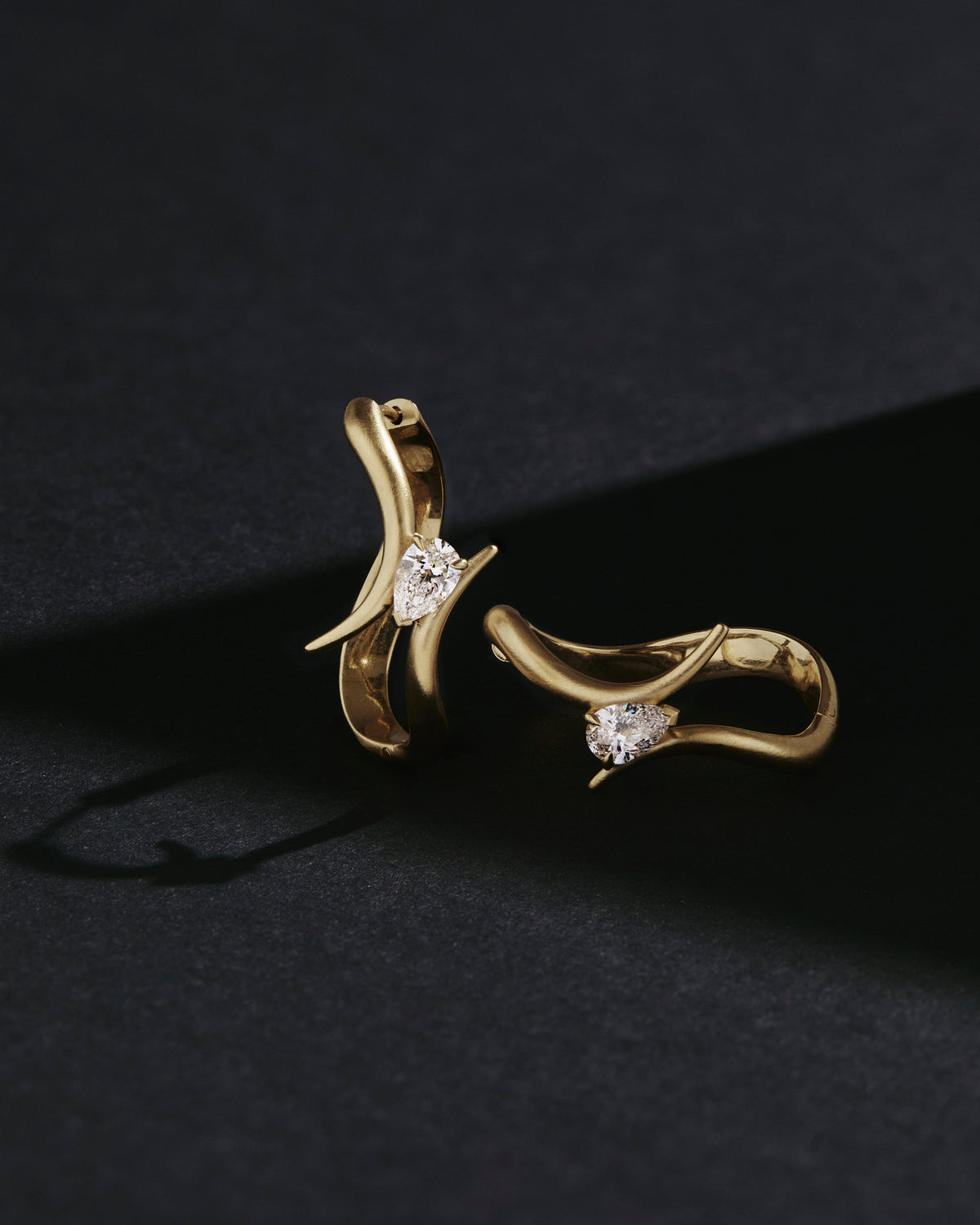
This aesthetic is deployed aptly in creations that emphasize the verticality of the stone. The pear shape, in particular, reveals all its singularity in pieces like the Eboris Twin pendant or the Eboris Twin earrings, where the precision of the cut highlights the purity of the diamond. It is also expressed forcefully in the rings of the Eboris collection, designed to magnify the elongated shape of the stone and reveal all its elegance, whether it is a piece of jewelry with character or a piece intended to mark an essential moment.

Niche sizes: Heart and Cushion

The cushion cut, recognizable by its rounded contours and its slightly retro appearance, seduces with its timeless charm and soft elegance. It evokes vintage-inspired jewelry, where light diffuses subtly through generous facets. The heart shape, rarer, is aimed at those looking for strong symbolism, intimately linked to emotion and attachment.

These fancy sizes are often chosen for very personal creations, such as birth jewelry or pieces designed to mark a moment in life. This particular sensitivity is found in particular in the Solitaire Amoretto Cushion, designed to highlight the softness of the lines and the luminous depth specific to this singular shape.
The different waist shapes: from classic to fantasy

How does cut influence the price of a diamond?

Cut quality directly influences the price and perceived value of a diamond.

The ratio between carat weight and visible diameter

A poorly cut diamond can retain weight unnecessarily, without increasing its apparent diameter. Conversely, a controlled size optimizes the visual rendering and gives the impression of a larger stone, without unnecessary additional cost.

Why does an “Excellent” size justify an additional cost?

An Excellent size requires a greater loss of material during cutting, as well as demanding know-how. This investment results in a stone that is brighter, more desirable and better valued in the long term.
How does cut influence the price of a diamond?

Expert advice for choosing the right size

Choosing a diamond is above all a search for balance. The cut plays a central role in the perception of the stone, revealing its brilliance, its personality and its overall harmony. More than an isolated criterion, it is part of a global reflection where proportions, light and elegance interact subtly.

Finding the balance between vibrancy and proportion

Depending on the characteristics of the stone, certain sizes offer a remarkable luminous expression while preserving great visual elegance. A Very Good size, for example, can present a particularly balanced result, revealing light with finesse and naturalness. The main thing lies in the consistency of the proportions, much more than in the search for a few extra hundredths of a carat.

The size is always assessed in relation to the other characteristics of the stone. The color of diamonds, just like the carat diamond, influences the overall perception of brightness and visual balance. It is the harmony between these criteria that allows a diamond to fully reveal its personality and express all its natural beauty.

Whether it is a wedding ring, a piece of birth jewelry or a custom creation, Maison Mazarin welcomes you for an appointment in its Salon Privé, for personalized support and an expert look at every detail.


The demands of Maison Mazarin

Each diamond selected by the House is chosen for its brilliance, its purity and the harmony of its proportions. These criteria guide our quest for balance and natural accuracy, in the service of creations designed to stand the test of time.

Our diamonds come exclusively from certified and responsible sources. All of our partners are members of the Responsible Jewelery Council (RJC) and respect the standards of the Code of Practice. This requirement guarantees complete traceability, in accordance with the Kimberley Process, excluding any diamonds from conflict zones. Stones over one carat are accompanied by a GIA certificate attesting to their quality and authenticity.
Expert advice for choosing the right size

beauty,
worn
naturally

KNOW-HOW
MAZARIN

Paris, our artisans shape each piece of jewelry by hand, in recycled gold and natural stones, carefully chosen for their beauty, their origin and their character.

Discover

The elephant: totem of the house
MAZARIN

The elephant, wonder of the wild world, embodies the memory, wisdom and strength that inspire the House. Its name pays homage to the great collector Mazarin.

Discover

THE COLLECTIONS
MAZARIN

Discover the Mazarin collections: rings, necklaces, bracelets and earrings inspired by the beauty of the wild world, to wear and create as you wish.

Explore

fitting
MAZARIN

At 34 rue du Faubourg Saint-Honoré, our Parisian salon welcomes you by appointment to discover, try our creations and experience a moment until you fall in love.

Make an appointment