Diamond Quality: Understanding the 4Cs

The art and science of cuttingIn evaluating diamonds according to the 4Cs, Cut, Clarity, Color and Carat, cut plays a vital role in determining the quality and value of a diamond. A quality cut maximizes brilliance: t...

The cut: key factor in the brilliance of the diamond

The art and science of cutting

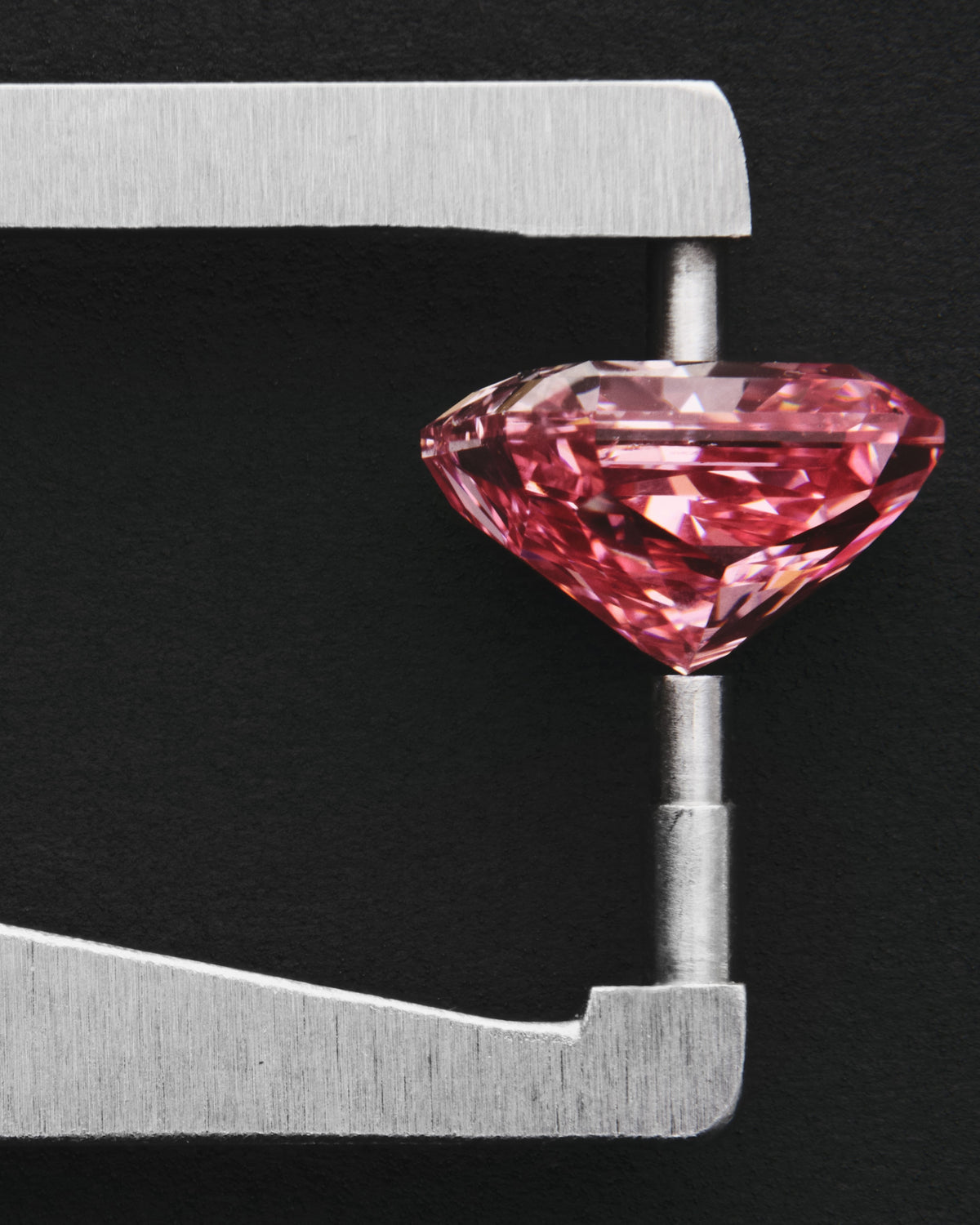
In evaluating diamonds according to the 4Cs, Cut, Clarity, Color and Carat, cut plays a vital role in determining the quality and value of a diamond. A quality cut maximizes brilliance: the brilliance of the gem, obtained by cutting each facet with extreme precision, reveals all the light and fire of the diamond. A well-executed cut can also hide certain color imperfections or small inclusions that are difficult to see, thereby improving the overall appearance of the diamond.

For each creation, Maison Mazarin seeks the diamond cut with perfect proportions, harmonious symmetry and impeccable polish. The pear, emerald and brilliant cuts are particularly highlighted.

Different shapes and cutting styles

Diamonds come in many forms, each offering a unique style and character. The most common are:

Round (brilliant): the most popular, renowned for its maximum shine thanks to its 57 or 58 perfectly proportioned facets.

Princess: a modern square cut that combines sparkle and geometric elegance.

Oval: lengthens the silhouette of the finger while offering a shine close to that of the round brilliant.

Pear: elegant and refined, it combines the grace of an oval shape and the precision of a point.

Emerald: recognizable by its stepped facets, it highlights the purity and transparency of the stone.

It is essential to distinguish the shape (the general appearance of the stone) from the quality of the cut of a diamond, which directly depends on the dimensions and diameter of the stone.

How to evaluate the fit

To evaluate the cut of a diamond, several aspects are considered, including symmetry, proportions and finish. Precise reference tools and standards, such as those established by the Gemological Institute of America (GIA), are used to objectively evaluate the cut quality of a diamond. You can also rely on the expertise of jewelers, gemologists and diamond dealers for advice on the cut quality of a diamond.
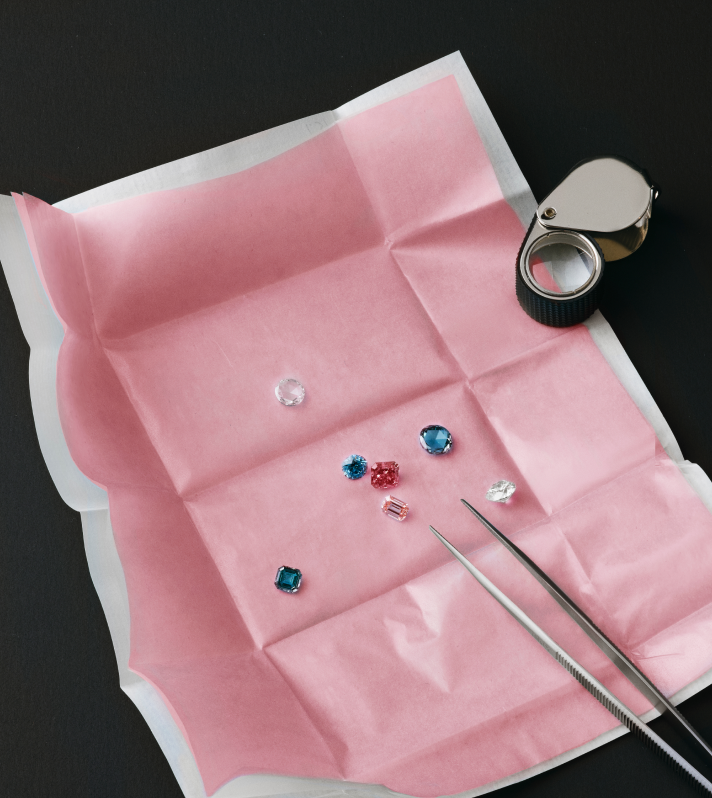
Pierres précieuses colorées sur papier rose avec pince joaillier et loupe d’observation.

The carat: understanding weight and value

The carat as a measure of weight

The carat of a diamond is one of the most easily identifiable aspects but also one of the most significant in terms of value. Diamond weight is expressed in carats, where one carat is approximately 0.2 grams. The greater the weight of a diamond, the rarer and more valuable it is. However, it is essential to understand that carat weight does not necessarily equate to physical size; a diamond can appear larger or smaller depending on its cut and depth, thus influencing its visual appearance.

How Weight Influences Value

In terms of value, the carat has a direct impact on the price of a diamond. As a general rule, the heavier a diamond, the higher its price will be, assuming the other 4C criteria remain constant. However, the value of a diamond does not depend solely on its carat weight; cut quality, color and purity also play a crucial role in determining its market value.

So while carat is an important factor to consider when purchasing a diamond, it is essential to consider all of the 4Cs to fully assess the quality and value of a gemstone.
The carat: understanding weight and value

Clarity: purity assessment

Diamond Clarity Levels: Classification of Inclusions and Imperfections

The clarity of a diamond expresses its degree of purity, determined by the presence or absence of internal inclusions and fine surface markings. This evaluation is based on an international scale, defined by gemological laboratories such as the GIA, which classifies stones from the purest to the most inclusive.

The rarest diamonds are those graded Flawless (FL), free from any visible flaws, even under ten times magnification. Next come the Internally Flawless (IF), perfectly pure on the inside and showing only slight superficial marks. The Very Very Slightly Included categories (VVS1 and VVS2) designate stones of exceptional purity, whose inclusions are microscopic and almost undetectable under a magnifying glass.

Very Slightly Included diamonds (VS1 and VS2) offer an ideal balance of clarity and brilliance. Their inclusions, tiny and invisible to the naked eye, alter neither the beauty nor the brilliance of the stone. Below are the Slightly Included (SI1 and SI2), presenting slight inclusions rarely perceptible without magnification, then the Included (I1 to I3), whose inclusions are visible to the naked eye and can influence the transparency or shine.

The diamonds in the Mazarin collections belong to the VS2 and VVS1 categories, corresponding to high levels of purity according to international standards. This level guarantees stones of exceptional transparency, with a pure and timeless shine – a true signature of the Maison's jewelry know-how.

The perception of clarity with the naked eye

Although these classifications are based on gemological expertise and observations carried out under a magnifying glass, the difference between the highest categories often remains imperceptible to the naked eye. What matters most is the visual perception and overall brilliance of the stone, as revealed in natural light.

Beyond grade VS2, inclusions are generally invisible to the naked eye, we then speak of “eye-clean” diamonds. These stones maintain a perfect appearance without requiring the absolute purity (and therefore higher cost) of IF or FL diamonds. This makes it a preferred choice for those seeking the balance of visual beauty and value.

Finding the balance between clarity and cost

Choosing the right level of clarity depends primarily on your priorities and your budget. If you place particular importance on purity, a VS or VVS grade diamond represents an excellent compromise between transparency and value. These stones have tiny inclusions, invisible to the naked eye, while retaining a remarkable shine.

For those who want to maximize their investment, it may be wise to allocate a larger portion of the budget to size quality, which influences perceived brightness more than a small difference in clarity.

The founders of Maison Mazarin, both trained gemologists, put their expertise and high standards at the service of each creation. Their precise look and attention to detail guarantee a selection of diamonds that are sublime, balanced and durable.

Color: choosing the right shade

Understanding the Color Scale

If clarity reveals the inner purity of the diamond, color expresses its personality and light. After transparency and brilliance, it is time to look at the subtle hue that distinguishes each stone: an essential nuance in the art of appreciating all the beauty of a diamond.

The scale of color of diamonds extends from the letter D (colorless) to the letter Z (slightly tinted). Diamonds classified in the first letters of the alphabet are the most prized for their whiteness and purity: they allow more light to pass through, revealing maximum brilliance.

As one moves down the scale, a yellow or brown tint may appear, influencing the brightness and perceived value of the stone. However, these nuances can also give a unique charm to certain diamonds, especially when combined with warm metals like pink or yellow gold.

Diamonds in the higher color categories are rarer and more expensive, but they are distinguished by exceptional quality and beauty. Others sometimes prefer lightly tinted diamonds, more accessible, but just as attractive to the naked eye.

Ultimately, the choice of shade depends above all on the sensitivity and personal preferences of each person, as well as the style and budget envisaged.

The diamonds in the MAZARIN collections essentially belong to categories between D and H, offering a perfect balance between whiteness, radiance and visual harmony.

Select the appropriate color

Consider your skin tone: Certain diamond shades can complement different skin tones. For example, diamonds with warmer undertones, like yellow or champagne, can work well with warmer skin tones, while more colorless diamonds can pair better with cooler skin tones.

Consider the intended use: If the diamond is intended to be set in an engagement ring or everyday jewelry, you may want to opt for a more neutral shade that easily pairs with different styles and outfits. For a more extravagant piece of jewelry or for a special occasion, you might consider a more distinctive shade or fancy color.

Consider symbolic meaning: Some buyers place greater importance on the color of the diamond. For example, a colorless diamond can symbolize purity and eternity, while a colored diamond can represent originality and uniqueness.

Compare different shades in person: If possible, examine different diamonds of different shades in person to see how they appear in natural light. By doing this, you can determine which shade you like the most and which shade best highlights the gemstone.

Trust your instinct: Choose the shade that appeals to you the most and gives you the most pleasure to look at. Whether it's a vibrant colorless shade or a lightly tinted shade with a pop of color, go for what speaks to you most.

Impact of color on shine and price

Color influences both the appearance and value of a diamond. The more colorless the stone, the more pure and intense it reflects light, increasing its brilliance and value.

However, a slight tint can sometimes enrich the personality of the stone, especially when mounted on a warm metal like rose or yellow gold. So, a subtle tint does not necessarily diminish the beauty of the diamond — it all depends on the desired effect and the harmony of the jewelry.

The role of the diamond certificate in the assessment of the 4Cs

Understanding grades and reports

Each high quality diamond is accompanied by a certificate issued by a recognized laboratory (GIA, HRD, IGI...). This document certifies its origin and its characteristics according to the 4Cs: cut, color, clarity and carat, guaranteeing an objective and standardized evaluation.

The importance of choosing a certified diamond

Choosing a certified diamond means ensuring its authenticity and traceability. Certificates issued by recognized gemological laboratories attest to the characteristics of each stone according to rigorous international standards. They thus guarantee the buyer total transparency and the confidence necessary for an informed investment.

At Mazarin, all diamonds from 1 carat are accompanied by an official certificate issued by a renowned independent laboratory. This document certifies the quality, cut, color, clarity and weight of the stone, ensuring its compliance with the highest standards of gemology.

Mazarin purchasing advice

We consider the choice of a diamond as a true encounter between beauty, knowledge and emotion. Each stone is unique, and our role is to guide you to find the one that suits you.

We invite you to pay particular attention to the 4C diamonds — cut, color, clarity and carat — whose balance defines the quality and personality of each gem. An exceptional diamond is always born from a perfect harmony between these four criteria.

Our gemological expertise allows us to support you at each stage, providing you with precise and personalized advice. We take the time to explain the subtleties of each stone so that your choice is informed and in accordance with your desires.

We also encourage you to think about the purpose of the jewelry: an engagement ring, an everyday piece of jewelry or an exceptional creation. This reflection allows you to define priorities between shine, purity and size, in order to create a piece that will accompany you over the long term.

For those who want a unique piece, we offer tailor-made creations, designed and created in accordance with French jewelry know-how. Each Mazarin jewel thus becomes a personal work, designed to stand the test of time with grace and elegance.

Choosing a Mazarin diamond means investing in a timeless piece, crafted with exacting standards and passion — a jewel that embodies the light, beauty and singularity of the wearer.
Mazarin purchasing advice

Conclusion

At Mazarin, we are committed to providing an exceptional purchasing experience, guided by transparency, integrity and recognized jewelry and gemological expertise. We accompany each client attentively, helping them find the diamond and the creation that correspond to their desires, their style and their story.

We believe in the value of time, in lasting beauty and in the power of transmission. Each piece of jewelry is designed to stand the test of time with elegance, combining timeless design and high standards of quality.

FAQ:

What is the best quality diamond?

Considering the 4 C's, a diamond considered to be of the highest quality would be graded with excellent cut, colorless or very lightly tinted color, clarity with no visible flaws under 10x magnification (such as Internally Flawless or Flawless), and significant carat weight, if that fits your preferences.

Ultimately, the best diamond for you will be the one that best fits your personal criteria, needs and budget.

How are diamonds classified?

Diamonds are classified based on several criteria, often grouped together under the term "the 4 Cs", as explained above.

How do you know if it's a real diamond?

Heat Test: Hold the diamond over a flame for a few seconds, then immediately immerse it in cold water. Real diamond will not be affected by heat, while most substitute stones will crack or shatter.

Breathing Test: Place the diamond on your mouth and breathe into it as if you were trying to blur a mirror. If the stone remains clean, it is likely to be a real diamond, as diamonds have grease-repellent properties. If the stone fogs up, it is probably fake.

Newspaper Test: Place the diamond, point down, on a piece of text printed in a newspaper. If you can't read the text through the diamond, it's likely genuine. Diamonds are exceptional conductors of heat and scatter light efficiently, making them difficult to see through.

Professional examination: If you are in doubt about the authenticity of a diamond, it is recommended to have it evaluated by a gemological expert or qualified jeweler. They can use specialized tools and techniques, such as binocular magnifiers, microscopes and thermal conductivity tests, to accurately determine whether the diamond is genuine.

What is the hallmark of the diamond?

Diamonds do not generally carry a specific hallmark like precious metals such as gold or platinum. However, they can be certified by reputable gemological laboratories like the Gemological Institute of America (GIA) or the European Gemological Laboratory (EGL), which provide authenticity and quality reports for diamonds.

Gemological reports typically include detailed information about the diamond's characteristics, such as its cut, color, clarity, carat weight, and other distinguishing characteristics. These reports are considered proof of the authenticity and quality of the diamond, and are often requested when buying or selling diamonds.
FAQ:

beauty,
worn
naturally

KNOW-HOW
MAZARIN

Paris, our artisans shape each piece of jewelry by hand, in recycled gold and natural stones, carefully chosen for their beauty, their origin and their character.

Discover

The elephant: totem of the house
MAZARIN

The elephant, wonder of the wild world, embodies the memory, wisdom and strength that inspire the House. Its name pays homage to the great collector Mazarin.

Discover

THE COLLECTIONS
MAZARIN

Discover the Mazarin collections: rings, necklaces, bracelets and earrings inspired by the beauty of the wild world, to wear and create as you wish.

Explore

fitting
MAZARIN

At 34 rue du Faubourg Saint-Honoré, our Parisian salon welcomes you by appointment to discover, try our creations and experience a moment until you fall in love.

Make an appointment